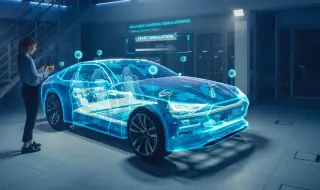
The automotive world is engulfed by the Metaverse – this "collective digital chaos" with blurred boundaries, where everything is virtual, but claims to be real. According to recent trends, it is this three-dimensional virtual environment, supported by virtual reality (VR), augmented reality (AR) and artificial intelligence (AI), that is driving the future of the industry. But is this a real revolution or just another expensive toy for marketing departments?
Designing on paper (or rather on pixels)
Of course, the industry is thrilled that it can "save valuable time and money" by switching to digital twins and virtual prototypes. We no longer have to wait for a physical model to see if the aerodynamics are good – everything happens in simulation. BMW even boasts virtual twins of factories that control and optimize processes.
Sounds efficient, right? But let's face it: a car is a physical product. It has to hold up on the road, withstand impacts, smell like leather and metal. Replacing tangible engineering with pixel simulations may be fast, but how long will it take before we start seeing models that are optimized for virtual reality, not the real road? True innovation has always been in the fusion of virtual and physical testing, not in the total replacement of the latter.
The Customer: From the Showroom to the Sofa
The second "great revolution" comes in the customer-manufacturer relationship. Virtual showrooms, VR test drives, and 3D configurators allow the potential buyer to "drive" a new model from the comfort of their own home. Companies like Nissan and Fiat have already entered Meta and Roblox.
All of this is very convenient, but where does it lead? How many of us would buy a house or even a new TV without seeing and touching it in the real world? A test drive is an emotion – the sound of the engine, the feel of the road, the precision of the steering wheel. No VR headset can recreate this authentic human-machine connection. By turning the process into an avatar game with virtual cars, we risk turning car buying into another impersonal digital click, devoid of passion and personal experience.
The car as a game console
The most absurd part is the idea that vehicles themselves are entering the metaverse. Connected systems and autonomous driving have paved the way for in-car VR experiences. Startups like Holoride are already working with Audi to entertain passengers with VR games that adapt to the vehicle's movement.
The real question is: why? The car is a means of transportation and freedom. If we turn it into a mobile arcade, full of headphones and helmets, don't we lose the meaning of the trip? Instead of enjoying the view, passengers will be staring at pixels. Even in the era of autonomous driving, this sounds more like an escape from reality than an innovation.
Using the metaverse to train technicians is useful, but we should not be fooled. All this virtual euphoria, fueled by 5G and the Internet, seems like an attempt to gloss over an industry that should be focusing on the real issues – safety, fuel efficiency (or batteries), and affordability.