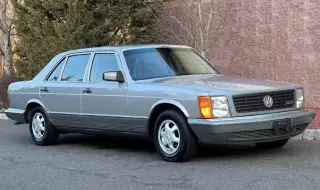
Sometimes the most intriguing stories in the automotive industry are those about projects that never see the light of day. That's exactly the case with the Volkswagen Zephyr – an almost mythical sedan born in the early 1990s. It was conceived as a kind of “people's S-Class“ – an idea that years later would be embodied on a slightly different scale by the Volkswagen Phaeton.
The Zephyr project is the product of an unusual collaboration between Volkswagen and Mercedes-Benz. At the time, "the people from Wolfsburg" ambitiously wanted to enter the premium segment, but without having the necessary platform for it. The decision came from Stuttgart – Mercedes-Benz kindly provided the basis, including the chassis and much of the structure of its legendary W126 S-Class model.
However, Volkswagen engineers did not limit themselves to assembly. They developed their own, distinctive vision for the front end, as well as engines and transmissions unique to the model. The goal was clear: to create a luxurious, solid car, but with a more affordable price positioning and simpler technology compared to the original from Mercedes. The name Zephyr (west wind) was chosen to symbolize a new, fresh trend in the luxury segment of the brand.
Visually, the Zephyr was an intriguing hybrid. It bore the impressive, monumental stance of the W126, but its front end was redesigned in the spirit of Volkswagen - with a high, square radiator grille and rectangular headlights, which, when viewed today, can be compared to those of the later models of the concern. The interior was designed to be more restrained and minimalist, in line with VW's more folksy nature, without sacrificing the sense of quality.
Despite the progress, in 1991 Volkswagen's management made the difficult decision to end the Zephyr program. The reason was more than logical - the risk of internal competition. A luxury sedan under the VW badge would undermine the positions of their own premium brand Audi, which was already gaining momentum and building a strong reputation in the business class.
Although the Zephyr never made it to the assembly line, it was not completely forgotten. Some of the design decisions for the front found their application years later, for example, in the design of the Volkswagen LT from 1996.
Today, the Volkswagen Zephyr remains an interesting prototype - a testament to bold ambition and how sometimes even the best engineering ideas stumble into complex corporate strategy. It is the unrealized flagship that could have rewritten Volkswagen history before the Phaeton era.