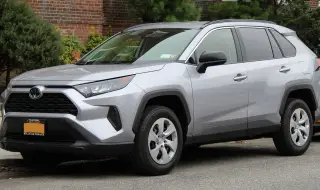
The automotive industry is witnessing another service campaign by Toyota. The company announced a mass recall of more than a million vehicles, and not because of a mechanical failure, but because of a simple software problem that doomed the rear-view camera to failure.
This colossal recall is becoming one of the largest on the market in 2025. A total of 1,025,000 cars are affected - and not only Toyota, but also cars from the luxury brand Lexus, and even their partners from Subaru. How a company with such a reputation could make such a stupid mistake in one of the trivial safety elements of a modern car remains a mystery.
The malfunction is directly related to the rearview camera, which has been mandatory by law for all new cars in the US since 2018. The defect is absurd: the image can disappear completely or, even more unpleasantly, freeze on a single frame, making maneuvering extremely dangerous. To resolve this unacceptable situation, the software of the Parking Assist ECU control unit will be updated - a repair that, alas, cannot be done remotely.
This means torture for owners: instead of an easy update "over the air", they will have to contact dealerships! And the list of shame or that of the affected models is shockingly long and covers almost the entire current range, produced between 2022 and 2026. The issue affects both gasoline, hybrid, and electric vehicles. These include:
Lexus: ES, GX, LC, LS, LX, NX, RX, RZ, TX (including hybrid and plug-in versions). Toyota/Subaru: Subaru Solterra, Toyota bZ4X, Camry Hybrid, Crown, Crown Signia, Grand Highlander, Highlander, Land Cruiser, Mirai, Prius, RAV4, Sienna Hybrid, Venza Hybrid, and others.
Although Toyota will send out official notifications by mail in December, the company strongly advises against waiting. Instead, owners should contact their dealer as soon as possible to avoid the inevitable queues and chaos that the scale of the problem will inevitably cause at service centers. The update procedure itself is simple, but its catastrophic scope will create enormous difficulties for dealers.