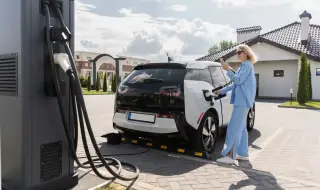
The British publication Financial Times has published an in-depth analysis that reveals an unexpected obstacle to the mass adoption of electric cars - the significant difference in the adoption rates of the technology between men and women. While the industry focuses on range and price, data shows that fears related to personal safety during charging are becoming a determining factor in women's consumer behavior.
The statistics speak for themselves: in the UK and the US, men are almost twice as likely to buy an electric car as women. Studies show that the main concerns are not related to the driving itself, but to the infrastructure. Many charging stations are located in poorly lit, isolated areas at the back of parking lots or in industrial areas, which creates a feeling of insecurity for women, especially when they have to spend 30 or 40 minutes there at night.
The problem is compounded by the fact that the process of charging an electric vehicle is significantly slower than traditional fueling. While at a gas station, the wait is short and usually takes place in a well-lit, staffed area, public charging points are often deserted. This is forcing manufacturers and network operators to rethink the design of their facilities to attract the female audience, who control a large part of household purchasing decisions.
Automotive experts emphasize that if this "gender gap" is not overcome, the goals for full electrification of transport will remain unattainable
The solution is not only in faster charging, but also in the creation of "safe hubs" with cafes, video surveillance and better lighting. Otherwise, the electric car risks remaining a product preferred mainly by men, while women continue to rely on the security of conventional models.
Another aspect touched upon in the material is the ergonomics of the charging cables themselves. They are often heavy and difficult to maneuver, which adds a physical barrier to psychological discomfort. With the introduction of more powerful chargers, the cables become even more massive due to the need for water cooling, which further complicates the experience of users with less physical strength.
Ultimately, the Financial Times analysis concludes that the success of the transition to clean mobility depends on the industry's ability to inspire confidence in all its customers. Safety is not just a "women's issue", but a fundamental element of the user experience that currently remains neglected by engineers and infrastructure designers.