The automotive industry often reminds us of fashion - everything old at some point becomes relevant again. After the Great Recession, the "Big Three" from Detroit solemnly promised to listen to the voice of reason and bet on economical, small cars. However, the enthusiasm evaporated in a few years, replaced by the hunger for higher margins, which sent classic limousines into history at the expense of ubiquitous SUV models. Today, as the prices of new vehicles reach the stratosphere, American giants are suddenly rediscovering the charm of the low silhouette. The question is whether they intend to stick around this time, or are they simply filling a gap in the schedule.
General Motors President Mark Royce recently dropped the bombshell by admitting that he would "kill for a hybrid sedan" in his lineup. His words sound almost ironic, given that the competition from Asia has never stopped doing just that. Ford's Jim Farley also changed the tune, admitting to the Wall Street Journal that the sedan market is "extremely vibrant." According to him, the problem has never been a lack of buyers, but rather the inability of Americans to produce these cars profitably. Apparently, the "Blue Oval" has finally found the formula that has made Toyota and Honda thrive for decades.
Stellantis is not far behind in this retrospective race. Nearly a decade after the inglorious retirement of the Chrysler 200 and Dodge Dart, Chris Fuele has hinted at a new model under the magic $30,000 mark. The promise is of a car that is "beautiful and inspiring" - words that sound great on paper but require serious commitment to overcome the skepticism of consumers accustomed to a high seating position.
Until now, Detroit has been convincing us that sedans are "bad business" because of their low unit profits. But the truth is in the volume. Look at Kia's January results - the new K4 is breathing down the neck of the Sportage in popularity. The same goes for the Honda Civic and Accord, which continue to be pillars of sales. These brands prove that if you give customers what they want, the money will come, even if the margins aren't as high as on a luxury King Ranch pickup truck.
Analysts at AutoPacific confirm this renaissance - over a third of potential buyers in the US would consider a classic sedan for their next purchase. In a sea of visually identical crossovers, the traditional three-volume body is starting to look like a symbol of individuality. “The demand is there”, Robbie DeGraff is categorical, pointing to the excellent results of the transformed Nissan Sentra and the eternal Toyota Corolla in 2025.
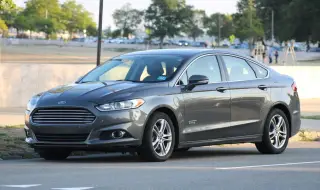
History teaches us that for Ford and GM, sedans were often just a “entry ticket” - a cheap way to hook a customer until they grew up enough to buy an Explorer or an F-150. But today there is a special breed of loyalists who refuse to get into a "truck." Like the Ohio techie who grits his teeth and sticks with his old Fusion simply because Ford offers no alternative. Now Detroit is trying to win those people back. But if sales don't explode right away, it's no wonder the "Big Three" will once again be on the decline, leaving us waiting for the next "small car" cycle sometime around 2045.