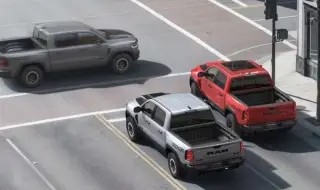
A serious trade storm is looming between the European Union and the United States, and at the center of the cyclone are the iconic American pickup trucks. Brussels is preparing a package of strict regulations that could effectively ban models like the Ford F-150, Chevrolet Silverado and Ram 1500 from European roads. The official motive? The safety of the most vulnerable road users.
However, American manufacturers and diplomats see this not just as a concern for pedestrians, but as pure protectionism. According to them, the new requirements directly undermine the spirit of the already negotiated but still unratified trade agreement. The paradox is complete: while tariffs on American vehicles were supposed to fall from 10% to zero, new technical barriers threaten to make these preferences completely pointless.
The bone of contention is the "Individual Vehicle Approval" (IVO) scheme. Until now, it has allowed powerful overseas vehicles to enter Europe under more relaxed conditions. However, from 2027, the EU plans to "tighten the noose", closing the loopholes for vehicles that do not meet European safety standards. Although these pickup trucks account for only 0.1% of the Old Continent's market, for the US the issue is a matter of principle and affects around 7,000 imported units per year, the lion's share of which are Ram models.
Environmental organizations in Europe applaud the planned changes, pointing to startling statistics. The height of the front hoods of these "monsters" creates huge blind spots. Calculations show that a driver of a large pickup truck may not even notice a 9-year-old child standing directly in front of the radiator grille. In comparison, visibility in standard passenger cars is many times better, which minimizes the risk of fatal accidents in urban environments.
While Washington accuses Europe of artificially creating trade barriers, Brussels seems determined to put pedestrian safety before Detroit's interests. If a compromise is not reached in the coming months, the legendary American workhorses could become exotics, available only for private collections, but not for European highways.