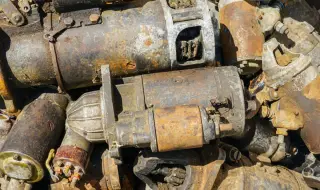
Every owner of an older car sooner or later faces that moment of quiet despair when he turns the ignition key and hears only an ominous click of the bendix. The diagnosis is clear - the starter has given up the ghost. At this moment, the eternal dilemma of the secondary market arises in the driver's head: whether to trust recycling at the nearest specialized service station, which at first glance seems fast and cheap, or to invest in a completely new component.
The belief that this node can be "repaired" endlessly is one of the biggest misconceptions among garage masters. Product managers in the industry are adamant that while repairs are often economically justified, they have their own clear technological limits. If your car is already a regular customer at the alternator and starter repair shop, and the newly replaced bushings, brushes and bendix continue to wear out at the speed of light, the news is bad. This is a clear sign of the so-called systematic aging of the material - fatigue of the housing and core, in which the device simply refuses to work properly.
Where then is the line between a reasonable compromise and a pure waste of money? Technical experts advise not to hesitate about a partial repair if the damage is superficial - for example, worn out teeth on the bendix (the drive mechanism) or failure of the switch (the switch). However, if the diagnostics reveal a more serious pathology, the game is over. Short circuits between the rotor or stator windings, broken circuits, deep wear of the collector or cracks in the bearing beds make any attempt at revival completely pointless. In such cases, the cost of labor and parts quickly exceeds the value of a new alternative component with a warranty.
It is interesting that the life of this unit also directly depends on the type of fuel under the hood. In diesel units, the starter is subjected to inhuman torture due to the enormous compression and resistance, requiring much more power and a strong clutch. There, repairs are more expensive, and components wear out faster. Gasoline engines are significantly gentler on the starting system, which allows the unit to live longer, and troubles are usually limited to cosmetic replacement of bushings or a relay.
To avoid expensive repairs, experienced engineers share a few golden rules that are massively ignored. First, never turn the key continuously for more than 10 seconds - if the car doesn't start, give the starter at least half a minute to cool down. Second, keep the battery in perfect health, because low voltage literally melts the contacts. And last but not least - keep the engine compartment clean. Oil, antifreeze or water leaks that drip directly onto the starter housing are the surest and quickest way to send it to the automotive morgue for eternity.