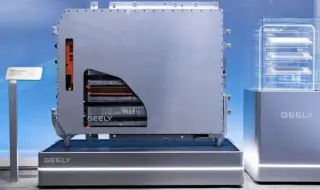
The Chinese automobile concern Geely has officially announced the next big step in the electric vehicle industry - the start of real-world tests of innovative solid-state batteries (Solid-State Batteries). The new battery packs are expected to begin pilot integration into the group's production cars from 2027, which could fundamentally change the rules of the game and equalize the autonomy of electric vehicles with that of diesel cars.
The technological solution will be gradually implemented across the holding's entire rich portfolio of brands. Along with Geely's main models, the new solid-state cells will power future electric premium models from Volvo, Zeekr, Polestar, Lynk & Co, Lotus, as well as the city electric vehicles of Smart, where the Chinese company is a co-owner.
The key to the breakthrough lies in the energy density, which in the top variants reaches a phenomenal 500 Wh/kg. For comparison, the lithium-ion and lithium iron phosphate (LFP) batteries widely used today offer between 250 and 300 Wh/kg at the cell level. Doubling the capacity to weight allows engineers to either drastically reduce the mass of the vehicle while maintaining the current mileage, or to provide a mileage of over 1000 kilometers on a single charge.
In addition to the mileage, Geely emphasizes the durability and safety of the new architecture. Laboratory and resource tests show a life cycle of an astonishing 1 million kilometers. The use of a solid instead of a liquid electrolyte solves one of the biggest problems of current electric vehicles - sensitivity to temperature amplitudes. The batteries remain stable within critical ranges from -40 to +120 degrees Celsius and are significantly more resistant to self-ignition in the event of physical damage or overheating.