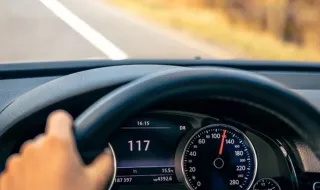
Driving at a speed exceeding the officially permitted speed limit has long been perceived not as a destructive violation by the majority of drivers in the United States, but rather as a legalized everyday habit. A nearly two hundred-page report prepared by the American Automobile Association (AAA) Foundation for Traffic Safety shows a worrying trend: exceeding the speed limit is now permanently integrated into social norms behind the wheel. Statistics show that an impressive 79% of drivers surveyed admit to violating speeding rules. Distributed by categories, 34% do this rarely, 30% - sometimes, and 15% define their speeding as a systematic practice. Only one in five drivers claim to strictly adhere to the posted speed limits.
The main reason for this dynamic lies in the subjective shift in the concept of risk. According to the survey data, most road users do not consider moderate speeding to be a real offense at all. The moment when drivers begin to perceive an actual violation begins only after crossing the threshold of 16 km/h above the posted speed limit. On urban highways with a speed limit of 113 km/h (70 mph), the real perception of speeding is activated only when reaching 126 km/h. What's more — the feeling of physical danger appears at significantly higher values: over 71 km/h in residential areas, over 137 km/h on urban expressways, and as high as 142 km/h on suburban routes.
The motives that push Americans to drive faster reveal both pragmatic and psychographic factors. The most frequently cited reason is the desire to overtake slower road users (31%), followed by the desire to reach the destination faster (25%) and avoid traffic jams (21%). For 19% of respondents, this is simply their standard way of driving. At the same time, the main obstacles to excessive pedaling are the fear of financial sanctions and fines (79%), the desire to minimize the risk of accidents (72%) and bad weather conditions (60%).
With regard to control measures, drivers show clear preferences. A full 87% support increased police presence and patrolling in risky sections, and 71% approve of the implementation of automated control cameras. However, infrastructure solutions are much less approved - artificial bumps ("speed bumps") are supported by only 43%, noisy lanes by 40%, and roundabouts by 39% of respondents.
Currently, the attitude towards intelligent assistants in cars remains reserved. Passive dashboard warnings are well received, but automatic speed limiters without a manual override have faced significant resistance. AAA analysts stress that the widespread normalization of speeding poses a serious risk to road safety, as it is estimated to continue to be a major cause of nearly 30 percent of fatal road accidents.