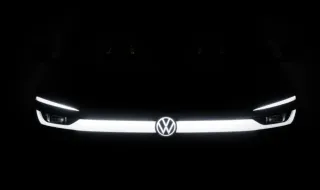
The German giant Volkswagen is once again looking at the limits of the impossible in automotive engineering, preparing to shake up the industry with its latest ambitious project. More than a decade after the legendary XL1 stunned the world with its unprecedented consumption of just 0.9 liters per 100 kilometers, the designers from Wolfsburg are bringing to the fore a spiritual successor, oriented entirely towards the era of full electrification. The new Mission Efficiency concept model was created with a single goal - to demonstrate how far modern technology can go when every molecule of air resistance and every watt-hour of energy is subjected to rigorous optimization.
The initial images hint at a vehicle sculpted with almost surgical precision in the wind tunnel. The silhouette features an extremely low front end and a flowing, elongated roofline that gently slopes toward the rear, forming a classic teardrop shape. The massive body arches house specially designed wheels designed to minimize air turbulence around the chassis. Instead of relying solely on huge and heavy batteries, the brand's team emphasizes the synergy between intelligent aerodynamics and maximum efficiency of the powertrain itself.
To prove its claims in practice, the German company is planning an ambitious real-world test, including a 780-kilometer journey between Wolfsburg and Vienna on a single charge. The demonstration run aims to overturn the popular understanding that long autonomous transition is possible only by increasing the physical size of the battery pack. Although the detailed technical characteristics and performance of the drive system remain shrouded in mystery, the successful completion of this marathon is likely to pave the way for the implementation of a number of innovative solutions in the brand's next series electric cars.