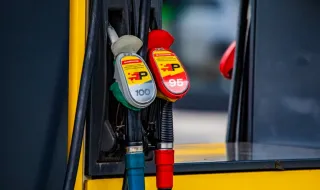
Among drivers in our country, there is still a perception that expensive high-octane gasoline — bearing the designations 98 or 100 on the column — is a magical additive that automatically adds horsepower and transforms any car. However, the truth is significantly more complex and lies in the chemical properties of the liquid itself. The octane number is not a measure of the energy content or calorific value of the fuel, but an indicator of its detonation resistance. In practice, the higher octane allows the gasoline to withstand higher pressure and temperature in the combustion chamber, without self-igniting before the spark from the spark plug is supplied.
The possibility of a real increase in power depends entirely on the design characteristics of the specific engine and its control unit. Modern engines are equipped with knock sensors that constantly monitor for uncontrolled combustion. When 100-octane fuel is poured into the tank, the computer detects the absence of micro-detonations and adjusts the ignition advance angle to an earlier phase. It is this spark advance that allows the fuel-air mixture to deploy with maximum effective pressure on the piston, which leads to a noticeable improvement in responsiveness and dynamics.
High-octane gasolines show the highest efficiency in modern turbo engines with direct injection and a high compression ratio. In turbocharging systems, air is introduced into the cylinders under high pressure, which dramatically increases the temperature in the combustion chamber and increases the risk of detonation. The use of premium fuel in such units allows the software to maintain the maximum possible boost pressure without the risk of damage, unlocking the full engineering potential of the car, especially during dynamic driving or high outside temperatures.
At the opposite end of the spectrum are classic atmospheric engines with a low compression ratio, factory-designed for mass 95-octane gasoline. Refueling such a car with 100-octane fuel is completely unnecessary and economically unjustified. Since the control unit of such a unit does not have software maps for working with such high-octane fuel, it burns a little slower and does not bring any additional power gain. The only potential plus in this case remains the content of cleaning additives, which most companies put in their premium fuels to remove carbon deposits from the valves.
The logical question also arises as to how much high-octane fuels offered at Bulgarian gas stations meet the specified specifications. Leading retail chains in our country import or produce their high-end gasolines by adding specialized chemical packages and ether components (such as MTBE), which raise the detonation resistance to a real 100 units. Laboratory tests and dyno tests show that premium fuels on the market really maintain their stated octane index and contain detergents that protect the fuel system from corrosion and deposits.
Ultimately, high-octane gasoline does not create "new" power from nothing, but simply removes the limitations that standard fuel imposes on more modern cars. If you drive a turbocharged engine, a sports car, or a model with direct injection whose manual explicitly recommends high-octane fuel, investing in 98 or 100 octane guarantees maximum performance, lower fuel consumption and engine longevity. However, if your car is a standard atmospheric city model, the difference will only be in the gas tank.