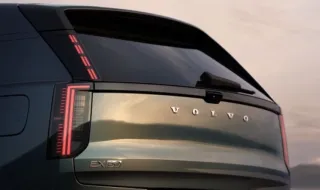
Automotive design is undergoing a quiet but highly visible transformation in the way brands emphasize their identity. Traditional metal chrome emblems and three-dimensional badges are giving way to massive text inscriptions located on the bodywork. This trend replaces familiar geometric symbols with the full name of the manufacturer, turning the font into a stylistic accent in its own right.
The change is most noticeable at the rear of vehicles, where brands such as Volvo, Skoda, Mazda, Lexus and Peugeot are increasingly placing spaced capital letters across the entire width of the hood. On certain new models, such as the Skoda Epiq electric crossover, text is now taking center stage at the front as well, replacing the historic winged arrow symbol on the hood.
There are several clear industry factors behind this visual change. First, there is the massive influx of new manufacturers, mostly from China, whose silhouettes often resemble each other in their aerodynamic shape. As it becomes increasingly difficult for the average observer to identify a brand based on its proportions or small logo alone, a clean lettering provides instant recognition on the road.
Electrification also plays a key role in this transformative step. The demise of the traditional radiator grille — the organ that carried the brand’s identity for decades — is forcing designers to look for alternative visual anchors. In response, light is becoming the new chrome: Volkswagen and Peugeot are integrating illuminated emblems into their new ranges, while Lexus is opting for backlighting behind the brand’s letters themselves.
While distinct letters and light elements facilitate initial identification, the widespread adoption of this methodology carries some risk. When almost every car manufacturer uses identical proportions, fonts and luminous strips, there is a real danger that cars will once again lose their uniqueness, merging into a common aesthetic framework.
In parallel with marketing strategies for recognition, engineers also point to purely technological arguments for this change. Smooth, integrated inscriptions and luminous panels generate significantly less air resistance compared to protruding chrome emblems. In modern electric vehicles, where every gram of aerodynamic friction directly affects the range on a single charge, the removal of protruding details improves the overall streamlined profile. In addition, flat textile elements and diode modules allow for much easier installation and higher durability in automatic washing, eliminating the risk of breakage or peeling.