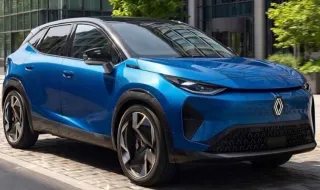
The French automaker Renault is already preparing the ground for the third generation of its extremely successful compact crossover Captur. Although its official debut is scheduled for the end of 2027, French engineers and designers are already laying the foundations for a significantly more modern and technologically mature model that will undergo a complete visual and conceptual transformation.
The current version of the Captur was launched on the market in 2019 and received a major update in 2024. Although it has been present in dealerships for several years, the model has maintained stable positions in Europe, maintaining strong sales and occupying a firm place among the ten best-selling cars in France and the most preferred urban SUVs on the Old Continent. It is this enduring commercial success that allows the company to plan its changes smoothly and without unnecessary haste.
In terms of construction, the new generation will step on the well-known, but fundamentally modernized CMF-B architecture, also used in the upcoming Clio. Unlike the platform continuity, the exterior will be radically changed. The rear will take a design from the Renault Emblème concept studio model from 2024, relying on expressive sculptural curves and protruding, three-dimensional light blocks. The front will be inspired by the R-Space Lab prototype, with horizontally shaped daytime running lights and a characteristic gap between the hood and the bumper, conveying aggressiveness of the appearance.
The interior space will also be completely redesigned. The cockpit will borrow the advanced ergonomics from the electric retro icons Renault 4 and Renault 5, as well as from the future Clio. The driver and passengers will have the openR link multimedia system with two horizontally arranged displays and full integration of built-in digital services from Google.
Under the hood, mainly efficient hybrid drives will be installed. The drive range will be headed by a full hybrid with a 1.8-liter gasoline engine and a power of 160 hp, followed by the Eco-G version with 120 hp, adapted to work on both gasoline and propane-butane. The entry level will probably rely on the well-known 1.2-liter turbo gasoline engine with 115 hp, although it has a short life cycle in view of the brand's strategy to switch completely to electrified ranges in the European Union by 2030.
A fully electric version of the Captur is not planned, since in the brand's portfolio this role is entrusted to the new Renault 4 E-Tech. Thus, Captur continues to be a key pillar for customers looking for practicality, ICE technology and not yet ready for full electrification.