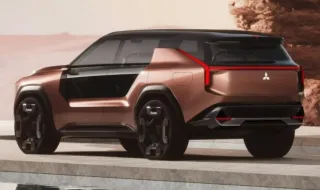
The all-new generation of Mitsubishi Outlander is emerging as one of the most important steps in the brand's renewal strategy. The transformed model is expected to debut in 2028 with a significantly more aggressive exterior and a seriously revised hybrid system. Japanese engineers are considering the integration of up to four electric motors, which will raise the dynamics and high-cross-country capabilities of the model to a completely different level.
The current fourth generation, which has been assembled since 2021, continues to be a pillar of the company's sales in North America. However, market pressure and a decline in volumes in the US market from 45,253 to 35,895 units delivered last year are forcing the brand to act decisively. Inspiration for the future design comes from the Mitsubishi Elevance prototype, presented during the Japan Mobility Show in the fall of 2025. The concept hinted at extravagant proportions, narrow light blocks, vertical LED strips and a muscular stance. The rear will probably feature a unifying LED diode strip, the ends of which continue up the drive columns.
However, the real engineering sensation is being prepared under the body. The current Outlander PHEV relies on a combination of a 2.4-liter naturally aspirated gasoline unit, two electric motors and a battery with a capacity of 22.7 kWh, generating a system power of 297 horsepower, 450 Nm of torque and an electric range of 106 kilometers. The addition of two more electric machines will allow each wheel to have a completely independent drive module. This will become the backbone for the next evolution of the brand's S-AWC (Super All-Wheel Control) all-wheel drive system, providing surgically precise torque distribution for off-road transitions and high stability in corners.
The strategic step towards a four-motor hybrid architecture is not just an attempt at a technological demonstration, but a critically needed response to the rapidly developing segment of plug-in hybrids. While competing European and Chinese crossovers rely mainly on software control and standard dual transmission systems, independent torque to each wheel would provide the Outlander with a unique market advantage. For the Japanese company, this is a chance not only to regain lost positions in the US and Europe, but also to cover its traditional heritage from rally championships through modern means of electrification.
For the time being, Mitsubishi headquarters is maintaining complete silence about the exact technical specifications and production schedule. However, the appearance of such a cutting-edge model in 2028 will mark the brand's final transformation into the era of high-performance, environmentally friendly powertrains.