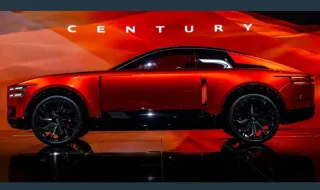
The symbol of the ultra-luxury Asian brand is on the verge of a historic transformation. For decades, the crown jewel of Japanese automotive engineering - the Century line - was reserved exclusively for the imperial family, high-ranking government officials and Tokyo's corporate elite. Today, the world's leading manufacturer is preparing a global offensive, the goal of which is to cross continental borders and directly enter the territory of authoritative names such as Rolls-Royce, Bentley and Maybach.
The path to the international stage passes through a gradual but significant evolution of the product portfolio. Until recently, the classic idea of the range was limited to a conservative limousine sedan, designed entirely with the comfort of the owner riding in the back seat in mind. However, trends have forced a change: in 2023, the SUV version was debuted, and in the fall of 2025, the public saw a concept coupe. In this way, the brand gained complete independence, occupying a niche located a step above the established premium brand Lexus.
Exploratory actions for potential global markets are already underway. The SUV has successfully entered China, and limited batches are being delivered to selected destinations in the Middle East and Asia. The exact dates for entering the European and American territories are still kept secret, but the diplomatic offensive is obvious. The move of Chairman Akio Toyoda was indicative, who appeared at the ceremony at the Automobile Hall of Fame in Detroit right behind the wheel of the model with the golden phoenix emblem. Chief Technical Officer Hiroki Nakajima confirmed that the visit was aimed at taking the pulse of the American industry and gathering initial feedback.
The model's main advantage over traditional European competitors lies in its authentic Japanese craftsmanship aesthetic. Each vehicle combines precise hand assembly with centuries-old craftsmanship techniques, including exquisite Nishijin-ori brocade and deep urushi lacquer. These specific details form a philosophy of luxury that is radically different from the Western understanding of prestige.
The financial dimension of such a project requires a precise balance. In Japan, the starting price of the SUV is 27 million yen, which is equivalent to approximately 158,000 euros. Although it holds the title of the most expensive series product of the concern, overall sales of the line have declined over the years – only about 500 units last year compared to 1,700 units sold in 1997. The expansion of the geographical scope is seen as a natural mechanism for restoring volume indicators.
In technical terms, the new era also raises the question of powertrains. Currently, the sedan relies on a hybrid system with a V8 engine, while the SUV version uses a V6 architecture. However, in automotive circles, there is increasing discussion about the possible return of the legendary twelve-cylinder V12 engine, which was the model's trademark for two decades, this time integrated into a modern hybrid configuration.
The upcoming clash for buyers in the highest segment will not be limited to the old European giants. Ambitious Asian contenders in the form of Maextro and Yangwang are already emerging on the horizon. Despite the intense competitive environment, Bloomberg Intelligence analysts emphasize that the strategic move carries a deeper meaning than the simple pursuit of sales volume: the Japanese giant aims for a full-fledged presence in the top segment of the auto industry, keeping Lexus' positioning absolutely intact.