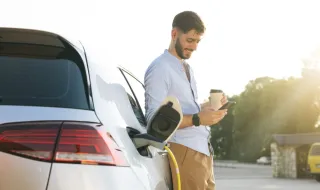
The entry of electric mobility in our country is no longer just exotic, but the rapid increase in battery electric vehicles (BEV) and plug-in hybrids has brought to the surface unexpected challenges for many drivers. Behind the wheel of a new vehicle, a large number of buyers face the so-called "newbie syndrome" - technical misunderstandings, software specifics and incorrect mileage planning, which turn the first months into a real test of patience.
The first six months: Getting to grips with the specifics and protocols
Charging network operators and roadside assistance centers are reporting a serious spike in calls from drivers who are driving an electrified vehicle for the first time. Analyses show that nearly half of the queries are not related to a real technical failure, but to a lack of experience. Drivers often do not know how to properly activate the charging session through the relevant mobile application, how to choose the right connector or why the charging cable sometimes remains locked to the port.
An interesting fact is that different manufacturers have identical or specific safety algorithms. In certain popular electric models, if charging does not start within a minute or two after connecting the cable, the station and the car terminate communication. To restart the process, the car sometimes needs to be unlocked, locked again or even moved a short distance to "reset" the error. In other Asian and European models, several consecutive unsuccessful charging attempts require activating the drive system and driving several kilometers for the system to allow a new attempt.
Software inconsistencies and cases at public stations
Another significant part of the cases stems from the lack of uniform software standards between all car manufacturers and charging stations. Updating the firmware on newer models sometimes leads to temporary incompatibility with specific fast chargers (DC). The result is familiar to many: the same car charges without problems at a given location, but "refuses" to accept a charge at a neighboring station from another operator.
Roadside assistance in our country also reports a change in the profile of emergency signals. A quarter of the calls in the "newbie" phase are related to a completely discharged battery due to poorly estimated extra-urban mileage or unexpectedly high consumption during highway driving and low temperatures. It is not uncommon for the 12-volt auxiliary battery to run down, blocking the electronic locks and the ability to start the main high-voltage system.
Change in habits: More frequent, but shorter sessions
With the introduction of more and more plug-in hybrids (PHEV), a change in driver behavior is noticeable. Due to their smaller capacity, hybrid batteries charge significantly faster, which leads to more frequent, but shorter stays at charging points. This phenomenon increases the load on urban infrastructure, as hybrid cars occupy charging points alongside fully electric models.
In our country, a small part of charging is done at home - at night on single-phase or three-phase current in garages and private properties. However, the lack of sufficient home charging points for those living in multi-family residential buildings forces them to rely entirely on the public grid, where prices per kilowatt-hour are noticeably higher, and the availability of free fast connectors during peak hours sometimes creates queues.
Market context and future developments
Despite the initial confusion, studies show that over 60% of electric vehicle owners remain satisfied with their choice after the initial six-month adaptation period. A key role in overcoming the "newbie syndrome" is played by dealers, who are starting to devote more time to training customers when handing over a new car, as well as the development of services that allow charging on different networks through a single application.