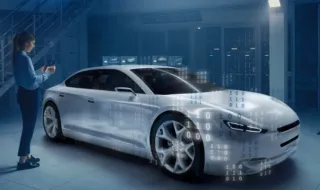
The entry of software innovations into the modern automotive industry goes far beyond simple voice commands or automatic parking systems. Over the next decade, advanced algorithms will fundamentally change not only the way we drive our cars, but also the methods of their maintenance, the calculation of operating costs and even the market for used vehicles. Despite the large-scale promises, however, full autonomy on the road remains the most complex and challenging obstacle for engineers.
The modern car of the future will have the ability to analyze the battery capacity in advance before a long trip, select optimal routes with minimized costs, detect early signs of technical deviations and draw up maintenance schedules. These individual functionalities already exist in embryonic form, and the main challenge for the industry lies in their integration into a comprehensive, contextually aware solution that fully understands the driver's needs.
Analysts indicate that by 2036, the penetration of digital intelligence will focus primarily on increasing safety, precise diagnostics and intuitive operation. Vehicles capable of fully autonomous driving in all road conditions will be established much more slowly and in stages. The development of sensor arrays and software platforms such as NVIDIA Alpamayo illustrates the desire to better recognize complex road scenarios, but no modern model is yet ready for unconditional autonomy.
The result for the end user will be a significant reduction in false warnings, smoother operation of adaptive cruise systems and safer support at busy urban intersections. At the same time, factors such as dirty camera lenses, heavy snow or aggressive sun glare will continue to require constant human control and physical security mechanisms.
The degree of autonomy continues to be classified strictly according to international standards. While the second level requires constant supervision by the driver, and the third allows the machine to temporarily take over tasks under specific conditions, the fourth and fifth levels aim to completely eliminate human intervention in certain or all geographical areas. However, the mass distribution of private driverless cars faces insurmountable legal and infrastructure challenges, where the complex environment of residential neighborhoods proves to be much more difficult for software than standardized highways.
In parallel, voice interfaces are undergoing a radical metamorphosis, becoming true personal travel assistants. Thanks to deep integration with cloud platforms such as Google Cloud, onboard systems now have multi-stage dialogues that coordinate navigation, personal calendars and charging stations. However, critical control functions such as braking and steering remain strictly separated from generative responses for the sake of absolute safety.
The field of technical maintenance is also entering a new era through preventive data analysis. Continuous monitoring of operating temperatures, electrical parameters and vibrations allows the recognition of potential failures before physical symptoms appear. Such an approach is transforming the activities of service centers, where software analysis and sensor calibration come to the forefront alongside traditional mechanics.
In electric vehicles, software innovations optimize the management of energy reserves and predict battery aging through platforms such as Bosch Battery in the Cloud. A transparent battery history becomes the most valuable document when buying a used electric vehicle, guaranteeing its residual market value.
Before they even reach showrooms, new models go through thousands of virtual simulations, where manufacturers like BMW optimize the production processes of the battery cells. Despite these production optimizations, however, the financial burden for the end customer remains due to the need for expensive sensors, computing power and long-term software support.
Cybersecurity and data protection are becoming increasingly important, governed by strict international regulations such as the UN R155 and R156 standards. The ability of a car to remain digitally enabled and relevant long after it leaves the factory will determine its true market success in the next decade.