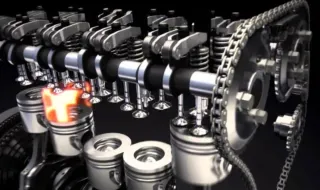
When the engine sputters, starts to tremble at idle and seems to lose power under the gas pedal, drivers often fall into silent horror. Misfire, known in automotive circles as misfire, is among the most insidious technical ailments that can befall a modern car. Ignoring these symptoms in the hope that the problem will go away on its own is a fatal mistake that turns a routine and inexpensive replacement of consumables into a catastrophic engine repair.
The main symptoms of the appearance of this defect are more than eloquent. The power unit loses its factory stability, becoming a source of unpleasant vibrations in the cabin, acceleration becomes uneven and slow, and fuel consumption jumps dramatically. At the same time, the yellow Check Engine light on the dashboard starts to flash alarmingly or stay on constantly, which is a direct signal from the on-board computer that the hot cycle processes in the cylinders are seriously disrupted.
The roots of this engineering challenge most often lie in the ignition system. Worn spark plugs with worn electrodes, punctured high-voltage cables or defective coils fail to generate the necessary high-voltage electrical discharge, which leads to the inability to ignite the fuel mixture. Sometimes this process is accompanied by characteristic rumbling in the exhaust system due to the afterburning of unregulated amounts of fuel in the hot catalyst.
However, if the diagnostics show that sparking is completely normal, engineers advise looking at the fuel and air lines. Clogged or "peeing" fuel injectors disrupt injection, and uncontrolled air leaks through cracked vacuum hoses or intake manifold gaskets critically impoverish the fuel-air mixture. This leads to thermal overload of the cylinder block and aggravation of unstable engine operation.
From a strictly technical point of view, the physics behind misfires pose a serious danger to the exhaust system through the so-called secondary afterburning process. When the fuel mixture in a given cylinder remains unignited due to a lack of spark or the wrong composition, it is pushed by the piston directly into the exhaust manifold through the open valves. When exposed to an extremely high temperature and oxygen environment, this unburned fuel spontaneously ignites in front of or inside the catalytic converter, whose operating temperature can jump from the normal four hundred degrees to over one thousand degrees Celsius, leading to the physical melting of the expensive metal element.
Another significant technological problem in prolonged driving with intermittent cylinders is the washing away of the oil film from the walls of the cylinder head. The unburned liquid fuel acts as a powerful solvent, washing away the protective oil layer provided by the oil pump and the segments. This leads to dry friction between the steel piston and the cast iron or aluminum cylinder liner, causing deep scratches, known as scoring, followed by catastrophic loss of compression and complete destruction of the engine.