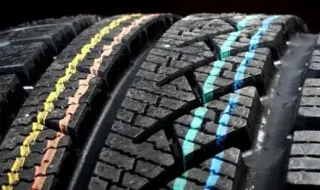
You've probably noticed the bright colored lines on new tires, but the truth is that they are not a secret rating of grip, sports performance or durability, but are a manufacturing marking intended primarily for workers and machines in the factory. The stripes help distinguish between different types of tires, rubber components and tread compounds during production. German company REA, which supplies marking equipment to the tire industry, points out that automated colored lines are used to identify materials and finished products. A blue line on one brand does not necessarily mean the same as a blue line on another.
In some manufacturing processes, information is contained in a combination of two colors. Therefore, associating a single red, blue or yellow stripe with a certain level of quality or grip can lead to the wrong conclusion. After installation, the lines gradually wear off from the road and the accumulated mileage. Instead of paying attention to the colored stripes, the buyer should check the size, model, load index and speed index printed on the tire. The date of manufacture is also important.
For example, the code “2125“ means that the tire was manufactured in the 21st week of 2025. This information allows you to determine whether a supposedly new tire was not manufactured one or two years earlier. Manufacturers often recommend replacing tires after five or six years, even when the grip still seems sufficient. The exact period depends on the instructions of the vehicle and tire manufacturer. In directional tires, another important marking is the arrow on the sidewall. It indicates the direction of rotation and must be observed during installation.