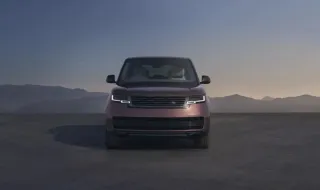
Range Rover acknowledges that reliability remains a weakness the brand needs to improve as it expands its lineup with electric vehicles. “I still believe this is a gap we need to close, but it is narrowing,” says Range Rover Managing Director Martin Limpert.
Quality ratings paint a mixed picture. In the 2026 Driver Power survey, Land Rover ranks 10th out of 30 brands overall, but remains 23rd in the separate quality and reliability category. In J.D. Power’s Initial Quality Study, the brand rises from 21st place in 2025 to 10th in 2026, taking fourth position in the luxury segment ahead of Mercedes-Benz and BMW. However, in terms of problems during the first three years, Land Rover ranks 27th out of 29 brands in the Vehicle Dependability Study.
Range Rover relies on an electronic system called Battery Digital Twin. It creates a digital copy of the battery in every electric vehicle from the brand and uses 900 parameters that are regularly transmitted via wireless updates. This allows engineers to monitor the battery’s condition and optimize its operation without the vehicle visiting a service center. The system is also linked to an eight-year or 160,000-kilometer warranty for the powertrain of Range Rover’s electric models.
The electric Range Rover and Range Rover Sport use 542 hp and 850 Nm of torque. Limpert believes that a vehicle with around 550 hp offers a sufficient balance between performance, off-road capability, comfort and low noise levels. According to him, Range Rover does not need 800- or 900-hp versions.
The next major step will be a facelift for the petrol and diesel versions. They will receive chassis changes and technological solutions initially developed for the electric Range Rover and Range Rover Sport.
Matt Becker, JLR’s Director of Vehicle Engineering, points out that the current architecture was developed 11 years ago and is gradually approaching the end of its life cycle, but will remain in use for at least another five years.