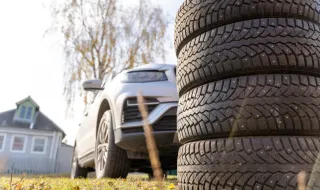
With the arrival of November and the sharp drop in temperatures across the country, automotive experts are urgently calling on drivers not to delay replacing their summer tyres with winter ones. Against the backdrop of morning fog, autumn rainfall and the appearance of the first icy patches at higher elevations and on mountain passes, experts insist that the mandatory change be carried out immediately in order to avoid the risk of serious road accidents on slippery roads.
Specialists advise planning a visit to a tyre service centre not in the early morning hours, when temperatures at the asphalt surface are critically low, but during the sunnier hours of the day, when thermometers show a slight rise. Drivers are advised to choose the nearest service centre in their locality in order to minimise the risks of driving with tread unsuitable for the season. If the vehicle’s technical condition or the lack of winter preparation does not allow safe travel, using public transport remains an alternative.
Weather conditions in the country require increased caution on the roads. Forecasters report a transition to typical autumn temperatures, with morning lows in many regions and in the capital falling to between 0 and 5 degrees, while conditions for morning fog and dangerous icy patches are present in valleys and mountainous areas. Daytime temperatures across the country are gradually settling between 9 and 14 degrees, but as night falls, cold air and westerly winds quickly lower the temperature, making the road surface extremely slippery for unprepared vehicles.
We should recall that the properties of the rubber compound used to make summer tyres are optimised for operation at high asphalt temperatures, with the critical threshold for their effectiveness reached when thermometers fall below 7 degrees Celsius. When the outside temperature remains below this value for a prolonged period, regardless of whether the surface is dry, wet or covered with frost, summer rubber loses its elasticity, hardens and its grip on the road deteriorates sharply. This leads to a drastic increase in braking distance, instability when manoeuvring and a higher risk of skidding on bends, which is why experts strongly recommend switching to winter tyres as soon as the first persistent autumn cold spells arrive.