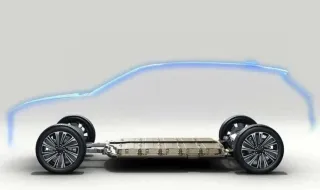
One of the most serious drawbacks of modern electric vehicles continues to be their substantial weight. Heavy battery packs often weigh hundreds of kilograms, require robust protective casings and take up valuable space in the cabin. To tackle this problem, leading manufacturers are increasingly turning to structural batteries, which are becoming an integral part of a vehicle’s load-bearing structure. However, this technological solution comes with a number of serious technical challenges.
The traditional design relies on a standalone battery module positioned beneath the floor between the two axles, with its own heavy casing and mounting hardware. With modern Cell-to-Chassis and Cell-to-Body concepts, the approach is fundamentally different. The battery is integrated directly into the chassis and body, meaning that it not only stores electrical energy but also bears part of the mechanical loads, increasing the overall strength of the vehicle. This eliminates the need for unnecessary reinforcements and mounting components.
The main incentive for adopting this technology is the drastic reduction in overall weight. A lighter electric vehicle consumes significantly less energy and achieves a longer range without the need to increase battery capacity. In addition, the space beneath the floor is used much more efficiently, expanding the possibilities for interior comfort or larger battery packs. Giants such as Tesla, BYD and BMW are already implementing or actively developing similar integrated platforms for their production models.
Despite the engineering advantages, integrating batteries into the load-bearing structure entails hidden risks. Ensuring safety in road accidents becomes an extremely complex task, as engineers must guarantee flawless behavior of the entire structure during side impacts and deformation. Cooling and vibration isolation also require precise solutions.
However, the most serious problem arises when repairs are needed. Since the battery is a structural element, even localized damage can compromise the overall strength of the body. Replacing individual components becomes extremely difficult, especially when the cells are factory-glued inside the pack. Although some manufacturers provide for the removal of the entire unit, the repair process remains expensive and complex, while subsequent disassembly and recycling at the end of its service life becomes a serious environmental and logistical obstacle.