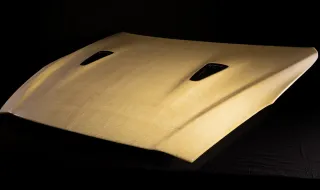
Nissan and Japanese company Food Reborn have developed an exterior automotive panel made from plastic reinforced with natural fibers extracted from discarded pineapple leaves. The material was created for demanding environments, including motorsport, where sustainable composites remain limited and expensive.
The development was announced on November 17, and the prototype will be presented to the public from November 18 to 20 at the SAMPE Japan Advanced Materials Technology Exhibition 2026 at the Tokyo Big Sight exhibition center in Tokyo.
The process begins with extracting fibers from the leaves. They are turned into flat yarn, which is then woven into fabric. The resulting textile layer is impregnated with resin and used as reinforcement in forming a composite exterior panel.
Nissan states that the finished material has higher tensile strength than traditional flax-based composites. The panel’s weight, production cost, and durability figures have not been disclosed.
„We have developed a new composite material reinforced with fibers from pineapple leaves – a by-product that is usually unused and discarded. This sustainable material also offers the high level of performance required in demanding environments such as motorsport,“ said Tatsuzo Tomita, Nissan’s corporate executive responsible for technological development.
According to data cited by Nissan, more than 50 million tons of pineapple leaves are discarded worldwide every year. Using them as a raw material makes it possible to produce fibers without affecting the food product itself. Nissan’s decision to focus the development on motorsport is related to requirements in some racing categories. When exterior panels are modified there, plastics reinforced with natural fibers are used. The manufacturer says supplies of such materials are limited, while their cost and supply stability create difficulties.
As part of the partnership, Nissan licensed Food Reborn its know-how for producing flat yarn, fabrics, and prepreg materials for molding. The Okinawa-based company specializes in biodegradable materials and already works with fibers from plant waste.
„Turning agricultural by-products such as pineapple leaves into high-performance materials for automobiles and sporting goods is highly significant. Guided by a strong conviction, we remain committed to uncovering new possibilities,“ said Etsuko Uda, representative director and chief executive officer of Food Reborn.
At this stage, Nissan has not said whether the composite will reach a production vehicle. The panel presented is a demonstration technology, and the company has yet to publish a life-cycle assessment or a quantitative calculation of its carbon footprint. The development is part of Nissan’s broader sustainability goals under the Nissan Green Program 2030.