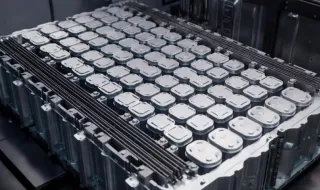
Electric mobility is developing at a rapid pace, yet the main obstacle to its widespread adoption has remained the same for years – the battery pack. Although driving range on a single charge is increasing and time at the charging station is gradually decreasing, many buyers continue to view the accelerated degradation of cells and the risk of spontaneous combustion in conventional lithium-ion packs with distrust. Against this backdrop, a technology with the potential to fundamentally transform the automotive industry is emerging – solid-state batteries, over whose initial mass deployment the largest manufacturers are already engaged in a fierce race, reports Motor1.
The engineering concept sounds deceptively simple: instead of the familiar liquid electrolyte, a dense solid medium made of ceramics, glass or advanced polymers is used. This solid layer also serves as a separator, physically keeping the electrodes apart and effectively eliminating the possibility of an internal short circuit and uncontrollable thermal runaway. Such an architecture opens the door to using lithium-metal anodes, taking energy density to an entirely different level.
For the person behind the wheel, this change brings tangible benefits. A lighter and more compact battery pack provides significantly greater range, while time spent at a charging station is reduced to just a few minutes – an experience close to the usual refueling process at a gas station. At the same time, the risk of electrolyte leakage or fire is kept to a minimum.
Clear commitments from leading industry players are already emerging in the race. Toyota is betting heavily on the new chemistry and promises to unveil its first mass-produced electric vehicle with an all-solid-state battery by the end of 2028. Volkswagen Group is also maintaining the pace – as early as February 2026, its technology partner QuantumScape launched the Eagle Line pilot facility in California for assembling test cells. At the same time, Asian giants such as BYD and Samsung are also making significant progress, as the company that first masters large-scale production will secure a decisive position in the global market.
Before the actual production line, however, there remains a serious engineering obstacle known as contact loss. During charging and discharging cycles, the electrodes continuously expand and contract; while liquid electrolyte easily accommodates these microscopic changes, the solid structure lacks the same elasticity, begins to crack and loses its close contact with the anode and cathode. This technical puzzle is compounded by the high cost of production, the need for sterile manufacturing facilities and extremely strict quality control.
While skeptics on online forums maintain that more affordable lithium iron phosphate (LFP) batteries are more than adequate for everyday urban travel, the International Energy Agency (IEA) offers a sobering assessment. According to the organization, the technology is still primarily at the prototype stage, while the first commercial models with solid-state batteries will appear only in the luxury segment and no earlier than the first half of the 2030s. A genuine market shift will occur only when production costs fall enough to make this innovation accessible to mass-market cars.