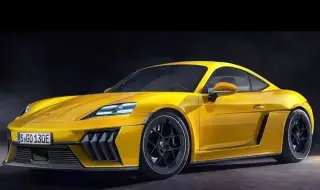
The German automaker Porsche is significantly adjusting its electrification strategy, moving away from the previously announced ambitious plans. As the authoritative publication Automobilwoche reports, citing internal sources, the company is postponing the launch of electric versions of the iconic 718 Boxster and Cayman sports models until at least 2027. An even more significant time shift concerns the flagship three-row electric crossover K1, which is already clear that it will not appear on the market until the end of the current decade.
One of the reasons for the changes are the regulatory restrictions imposed in the European Union. In particular, due to new cybersecurity standards, Porsche was forced to stop production of gasoline 718 models in 2024. As a result, a gap has formed in the European market in the model range, which, according to the company's new plans, will remain unfilled for at least two years. This temporary vacuum has forced the company to postpone the launch of electric versions that were to succeed the current gasoline models.
Due to a change in strategic course, Porsche is temporarily suspending the expansion of its battery division Cellforce Group, which was to become the main supplier of high-performance batteries of a new generation for the brand's sports electric cars. The concern is now considering alternative development scenarios, including a return to gasoline internal combustion engines or mild hybridization of its models. The question of the company's further participation in projects to develop solid-state batteries, which were considered a promising technology of the future, also remains open.
Also indicative is the revision of plans for the K1 crossover, which was previously announced as the brand's electric flagship, which should combine sporty dynamics with family functionality. According to new information, the model may receive not only a hybrid power unit, but also a traditional gasoline version, which would be a serious departure from the initial concept of electrification of the flagship.
At the same time, Porsche is not completely abandoning electrification - on the contrary, elements of the new hybrid platform V4Drive are already being introduced into the model range. In particular, this technology is used by the new Porsche 911 GTS, and the expected GT2 RS will most likely also be a hybrid. Instead, a fully electric version of the legendary 911 model, according to insiders, may not appear before 2030, that is, in another five years.
Thus, the previously announced goal of achieving an 80% share of electric vehicles in total sales by the end of 2030 now seems unlikely. Porsche is moving to a much more cautious and flexible strategy, adapting its decisions to technical challenges, regulatory pressure and changes in consumer preferences. This shows that the company is ready to preserve its heritage and flexibly respond to market challenges, instead of blindly adhering to loud declarations.