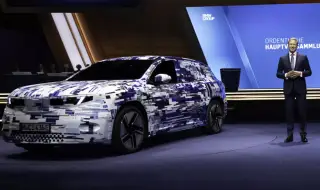
BMW has been criticized in the past for being too slow to develop attractive electric vehicles and was one of the few major automakers not to commit to a firm date for selling only electric vehicles. Now that some of its competitors are backing away from their pledges to sell only electric vehicles, the Munich brand's more cautious approach appears to be paying off.
The German brand has long believed that a broad range of drive technologies is needed, and at its annual meeting last week, CEO Oliver Zipse doubled down on this approach. That's why BMW will continue to produce and sell petrol, diesel, hybrid and hydrogen cars, alongside the many new electric vehicles it is already developing.
„We accept the ambitious political goals seriously, but we do not believe in technically one-sided regulations that limit supply“, said Zipse. “The same principle applies to the circular economy. Here too, only a comprehensive approach can enable and stimulate investment. Because, as a stand-alone technology, electric mobility leads to a dead end – that is already clear. The differences are simply too great, even within Europe.“
Zipse gave examples from Belgium and Italy. In Belgium, generous incentives led to electric cars and hybrids reaching a market share of over 60% last year. In Italy, by comparison, they only accounted for 4% of sales. He added that the most important question was how to effectively reduce CO2 emissions and that the answer was not “thinking in black and white“.
“While other manufacturers are reversing course or adjusting their strategy, we are on the right track "Even politicians are starting to realize this: The new German federal government is supporting a broad approach to technology, while the European Commission is trying to make Europe more competitive."
It is true that demand for BMW's electrified models is growing, but it is due to the many versions with so-called mild hybrids, which use a small electric motor that plays a slave role mainly to lower emissions and meet regulations. In the first quarter, electrified vehicles made up more than 25% of all new car sales, but only a fifth of them were fully electric. And in 2028, BMW will launch its first hydrogen-powered car with the help of Toyota.