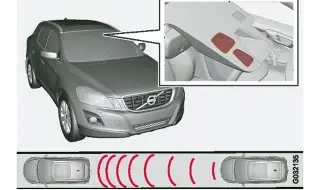
In the modern automotive world, where safety technology is of paramount importance, the Swedish manufacturer Volvo has long established itself as a leader. One of the company's most significant, but often underestimated innovations is the City Safety system. It is a set of assistance functions that are designed to prevent or mitigate collisions in urban environments.
How does it work?
City Safety uses a combination of radar and camera sensors mounted in the front of the car. They scan the road for potential hazards, such as other vehicles, pedestrians, cyclists and even large animals. The system works actively at speeds of up to 60 km/h, warning the driver with an audible and visual signal if it determines that a collision is imminent.
Beyond the warning
If the driver does not react to the warning, the system automatically applies the brakes. It can either stop the car completely or reduce its speed significantly to soften the impact. This autonomous response is particularly useful in heavy traffic or in moments of distraction, when an accident can happen even in a split second.
Protecting the most vulnerable
One of the biggest advantages of City Safety is its ability to recognize pedestrians and cyclists. The system is designed to protect the most vulnerable road users, making it valuable for both the driver and those around them. It is part of Volvo's safety philosophy, which aims to reduce accidents to a minimum.
Why is it so important?
Although it is not as spectacular as a sport mode or an infotainment system, City Safety is an example of true innovation that saves lives. It is standard equipment in most modern Volvo models and is proof that the real progress in the automotive industry lies in technologies that make us safer on the road.