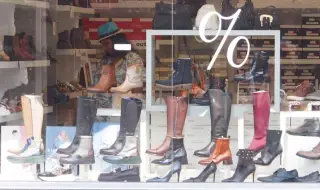
Shoes are a universal commodity — we all buy them, but behind the shop windows lies an industry in collapse. The production of Bulgarian footwear and leather accessories is experiencing its most difficult period in the last few decades. The chairman of the Industry Union of the Leather, Fur, Footwear and Haberdashery Industry, Plamen Ivanov, outlines a dramatic picture for the sector, in which a shortage of personnel, uncontrolled imports and absent state control are intertwined.
„At the moment, there is essentially no development of the industry. Of the over 200 enterprises related to footwear and haberdashery production, there are currently no more than 20, and those are small enterprises with a staff of under 50 people.“ In his words, former flagships such as “Flavia“ (Plovdiv), “Kavaler“ (Sofia) and “Record“ (Gabrovo) are a memory of the past. „The sector can be said to be in collapse and on the verge of extinction.“
The reason for the collapse: policy without vision and imports without control
„And for this whole tragedy in this sector of the economy, the policy led by the state is to blame, and more precisely "The closure of vocational high schools and technical schools that prepare personnel for the industry," says Ivanov, quoted by Money.bg. The collapse in vocational education leads to a chronic shortage of craftsmen and technologists. Added to this is external pressure: „A big problem is also the resolution of the unrestricted import of duty-free Turkish shoes and Chinese shoes with minimal duties at reduced prices.“
The market: dominance of cheap imports
„The interest in Bulgarian shoes in "The moment is low on the part of consumers, mainly due to competition on the part of large and primarily low-quality imports," adds Ivanov. Almost the entire assortment in stores — physical and online — is imported, often of “questionable origin“ and predominantly synthetic materials. “Unfortunately, the Bulgarian market as a whole does not exceed 5% of domestically produced shoes“, concludes the expert.
Production of shoes, price levels and lack of safety control
The surviving enterprises work mainly on shoes for Italy, and the export of finished Bulgarian shoes is practically non-existent. For quality local production, the price remains reasonable: “The average price of quality Bulgarian shoes - both women's and men's, made entirely of natural materials - is approximately between 80 leva and 100 leva without VAT.“
The most worrying thing — the absence of systematic laboratory control over imported products: „Π gives the impression that in Bulgaria no one requires shoes sold in the retail chain to be tested for allergens such as dimethyl fumarate, formaldehyde and hexavalent chromium.“, which makes them potentially dangerous to human health.
Gloomy forecasts
„Our sector not only has difficulties, but according to our understanding, the footwear, leather and haberdashery manufacturing sector may not exist by the end of 2030 if the state's policy does not change.“ There are solutions — and are clear: “The most necessary measures, I would define them in two directions. One is to revive vocational high schools and technical schools… The other direction is to turn attention to uncontrolled and (almost) tax-free income", says Ivanov.