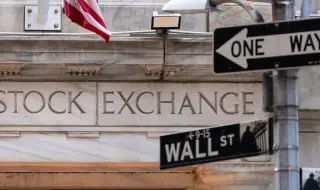
The S&P 500 fell sharply after cutting its gains on Friday and after President Donald Trump threatened to impose a “massive increase“ in tariffs on imports from China amid a dispute over rare earth metals.
At 18:50 GMT, the benchmark S&P 500 fell 2.1%, the tech-heavy Nasdaq Composite fell 2.7% and the Dow Jones Industrial Average fell 640 points, or 1.4%.
Trump threatens to increase tariffs on China, rare earth stocks rise
The US president said his administration was considering retaliatory measures against China that would could include a “massive increase“ in tariffs on imports from China after Beijing restricted exports of rare earth metals to the United States.
“As President of the United States, I will be forced to financially counter their move,” Trump said in a post on his social media platform Truth Social. “One of the policies that we are considering at this time is a massive increase in tariffs on Chinese products imported into the United States of America. There are many other countermeasures that are also being seriously considered.“
Rare-earth stocks, including USA Rare Earth Inc (NASDAQ:USAR), MP Materials Corp (NYSE:MP) and NioCorp Developments Ltd (NASDAQ:NB), rose sharply, adding to recent gains that were driven by bets that the Trump administration would continue to take a strategic interest in the sector.
Trump also warned that may cancel upcoming talks with Chinese President Xi Jinping, including about Alibaba.
U.S. consumer sentiment edged up slightly in October but was more upbeat than expected, while one-year inflation expectations eased but remained elevated.
A monthly report from the University of Michigan showed the consumer sentiment index at 55.0, down from 55.1 in September. Economists had forecast a reading of 54.1.
Improvements in current personal finances and business conditions for the year ahead were offset by declines in expectations for household portfolios and conditions for purchasing durable goods, said Joan Hsu, director of consumer research at the University of Michigan.
„Overall, consumers perceive little change in the economic outlook since last month. Wallet issues, such as high prices and a weakening job outlook remain at the forefront of consumers’ minds. “Consumers do not currently expect any significant improvement in these factors,” Hsu added.
There is also minimal evidence that the ongoing federal government shutdown, now in its second week, has impacted consumers’ views on the economy, Hsu said.
The economic calendar has been largely quiet recently, with the federal government shutdown slowing.