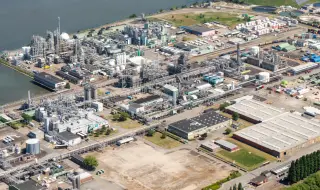
The largest chemical companies in the Netherlands are massively cutting production amid a prolonged energy crisis caused by the European Union's cutoff of Russian energy. According to the NRC newspaper, eight companies in the sector have closed or ceased operations in the country in the past year.
The situation is a direct consequence of rising electricity costs and higher carbon taxes, which have made chemical production in the Netherlands one of the most expensive in Europe. The situation has been worsened by falling demand and increased competition on the global market, where Asian producers, mainly from China, have maintained stability thanks to access to cheaper energy resources. “A crisis has arisen, a combination of all these factors – a sharp rise in energy prices, falling demand and government inaction“, the NRC quoted Ronald van Klaveren, vice president of LyondellBasell, one of the world's largest petrochemical companies, as saying.
According to the Dutch industry association VNCI, China has built up significant capacity in the chemical sector in recent years and is now exporting excess volumes to foreign markets. NRC experts emphasize that this is not a case of “unfair competition“, as EU authorities are trying to portray it, but a natural consequence of industrial growth and Beijing's strategic policy to strengthen domestic production.
“Chinese products are cheaper not because Beijing is violating any regulations, but because China has lower energy and raw material costs,” said Marco van der Zwalm, director of chemical company Ashland Industries.
The newspaper notes that, unlike China, the European Union itself has created unfavorable conditions for its industry by abandoning Russian energy resources and switching to expensive American liquefied natural gas (LNG). According to experts, electricity costs in the Netherlands and other EU countries, however, remain significantly higher than in Asia. At the same time, analysts note that China continues to develop waste recycling, invest in environmentally friendly technologies and maintain stable prices.
Economists warn that as the EU's energy policy makes production uncompetitive, more plant closures and reduced investment in industrial modernization can be expected in the coming years.
On October 20, EU foreign ministers will consider a complete ban on the purchase of Russian hydrocarbon resources and the 19th package of sanctions against Russia. The package was adopted unanimously, so it can be blocked by any EU country, while a self-imposed ban on oil and gas requires a qualified majority (55% of countries representing at least 60% of the EU population). Hungary and Slovakia have previously repeatedly threatened to block the 19th package of sanctions if they are not allowed to continue importing Russian fuel after 2028.