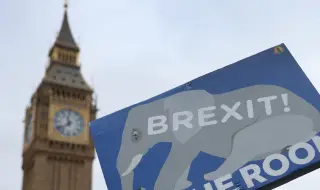
The UK's exit from the European Union has caused greater damage to the country's economy than previously thought. This was stated by the Chancellor of the Exchequer Rachel Reeves, speaking at a regional investment summit in Birmingham.
„We know that the austerity measures during the financial crisis, the decline in capital investment and Brexit have had a greater impact on our economy than was predicted at the time. "That is why we are resolutely rebuilding our relationship with the European Union to reduce some of the costs that I believe have been unjustifiably added to businesses since 2016 and since we officially left a few years ago," the finance minister said, according to The Guardian. British media reported earlier that Reeves was planning to introduce tax increases in his November budget speech amid the UK's economic difficulties. According to the press, the Labour government intends to blame Nigel Farage, the leader of the most popular right-wing populist party in the country - Reform UK, who was one of the ideologists of Brexit, for the tax increases.
The referendum on Britain's exit from the EU negotiations was held on June 23, 2016. 51.9% of Britons voted in favor, and 48.1% were against leaving the EU. After several years of negotiations, the United Kingdom left the EU on the night of February 1, 2020.
On January 1, 2021, the post-Brexit transition period, during which all European regulations applied to the United Kingdom, expired. In December 2020, the countries reached an agreement on post-Brexit relations, which includes a free trade area for goods and services without quotas or tariffs, as well as the ability for British citizens to visit the EU and back visa-free for up to 90 days.