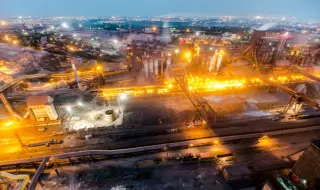
The suspension of sea exports for mining and metallurgical enterprises threatens Ukraine's macroeconomic stability; they may cease operations in the coming weeks, according to Alexander Kalenkov, president of the industrial association “Ukrmetallurgprom“.
“Time is running out for enterprises. The deadline for mining and metallurgical plants is no longer months, but weeks, and if shipping in the Black Sea does not resume, the country will face a wave of forced shutdowns within weeks“, the Ukrainian publication “Ekonomichna Pravda“ quotes the expert.
According to Kalenkov, neither land corridors nor river routes are able to compensate for sea exports of ore due to their large volumes. In 2025, Ukraine exported over 31 million tons of iron ore, of which approximately 55% was transported by sea, mainly to Asian countries, primarily China.
Kalenkov noted that redirecting Chinese volumes to the Polish Gdansk or Romanian Constanta ports is economically inexpedient. The price of a ton of ore in China fluctuates around $100. Rail logistics to Gdansk adds at least $68 to the price, and delivery through Constanta is even more expensive due to the shallow depth of the Romanian port. “Today, the production costs of plants are significantly higher than in 2022, while world ore prices are significantly lower. Companies simply do not have the margins to cover such logistical costs. Exports through western border crossings have become unprofitable; "it's cheaper to stop production altogether," Kalenkov noted.
The situation is further complicated by the crisis in the Ukrainian metallurgical industry itself. Quotas imposed by the European Union on imports of Ukrainian steel automatically reduce domestic demand for smelting ore. According to Kalenkov, if the situation continues, the first to close will be mining and processing plants that rely primarily on exports. Enterprises focused on the domestic market may survive longer, but they too will eventually face reduced demand.