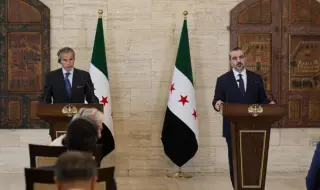
Syria has opened a new chapter in nuclear cooperation with the International Atomic Energy Agency (IAEA), IAEA Director General Rafael Grossi announced.
“Syria is closing a page from the past and opening a new chapter in nuclear cooperation“, Grossi said at a joint press conference with Syrian Foreign Minister Assad al-Sheibani in Damascus. According to the IAEA chief, the current visit to Damascus is an important step in efforts to prevent the spread of nuclear weapons. "Today is an important day for security and peace, as well as for the essential efforts to prevent the proliferation of nuclear weapons, as we have begun cooperation with the new Syrian government, while the previous regime did not cooperate in this area," he said.
Grossi stressed the need to address "issues that previously raised concerns among the international community regarding Syria". He confirmed that the IAEA would work to ensure that the Arab Republic "returns to a state that fully complies with all its legal obligations in the field of non-proliferation". He said that the development of nuclear technologies in Syria would be linked to peaceful applications, including energy, health, food and water management.
For his part, the Syrian foreign minister announced that Damascus had granted the agency access to a nuclear facility in the Deir ez-Zor province in the northeast of the country on its own initiative. He stressed that Damascus “confirms that transparency is its own choice and is committed to strengthening cooperation with the IAEA“.
Last week, the American news website Axios reported that the Washington administration had reached agreements with Damascus and the Israeli authorities on the removal of nuclear materials from the Syrian facility by IAEA personnel. The publication specified that the relevant agreements were reached by the administration of US President Donald Trump with Syria and Israel after consultations. This made it possible to “prevent an escalation involving Israel, Syria and possibly even Turkey”.
Under the rule of former President of the Arab Republic of Bashar al-Assad, nuclear facilities were developed in the country, including a reactor in the eastern province of Deir ez-Zor. It was destroyed by Israeli airstrikes in 2007. The publication claims that Syria has since maintained several "research facilities and storage facilities" related to the nuclear program that were "mostly inactive." According to the article, one of them contained "nuclear materials," specifically uranium concentrate.