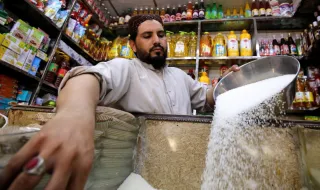
The price of raw sugar on the ICE exchange reached its highest level in 19 months, after concerns about excessive rainfall in Brazil increased expectations of lower production.
The most actively traded futures contract rose by 4% to 20.73 cents per pound, after reaching 20.81 cents during the session. In the previous week alone, raw sugar added 7.7%.
The main reason for the increase is the weather conditions in Brazil - the world's largest sugar producer. Record rainfall in September and forecasts for more rain in October cast doubt on whether production will meet preliminary estimates.
Brazilian production fell by 41.6% in the first half of September due to excessive rainfall. The bad weather is also causing delays in loading sugar at some of the country's ports.
An additional risk is El Niño, which could affect harvests in the three leading producers - Brazil, India and Thailand. Production in the European Union is also expected to decline significantly due to drought in the summer.
White sugar futures also rose - by 3% to $547.60 per ton, after reaching $552.50, the highest level since late August.
Coffee also rises in price
The price of Arabica coffee rose by 1.3% to $2.9255 per pound, after a 3.6% increase in the previous week.
Here again, Brazil is in the focus of the market. Excessive rainfall raises concerns about the quality of the crop, while participants are also monitoring the risk that El Niño could lead to a period of drought.
Although a good Brazilian harvest is still expected for the 2026/2027 season, low inventories and high physical coffee prices in Colombia and Central America support quotes in the short term.
Robusta also rose in price - by 1.7% to $3,528 per ton. Meanwhile, Vietnam, the largest producer of this variety, exported 1.45 million tons of coffee in the first nine months of 2026, or 16.2% more year-on-year.
El Niño also supports cocoa prices
Cocoa also saw an increase. London futures rose 3.4% to 4,382 pounds per tonne, while New York futures rose 3.5% to $5,867.
The market is currently caught between ample supply in the short term and deteriorating expectations for the 2026/2027 harvest.
The main crop in Côte d'Ivoire, the world's largest cocoa producer, is expected to decline by about 17% this season. Insufficient rainfall further increases the risk of a shorter main season.
The movement in sugar, coffee and cocoa shows how extreme weather conditions are already affecting international agricultural commodity markets. The continued price increase could gradually be passed on to the costs of food and beverage producers and subsequently to final consumer prices.