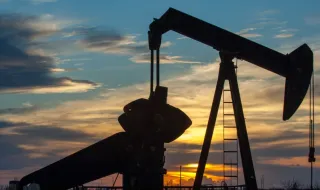
High oil prices are prompting U.S. companies to accelerate completion of new wells and increase production in North Dakota, the third-largest oil-producing state in the U.S. The number of active wells has already reached a historic high, according to state regulators.
“Operators are moving faster to get wells on line and take advantage of high oil prices,“ said Richard Suggs, a geologist with the North Dakota Oil and Gas Division.
The main incentive is the rising cost of the commodity. U.S. West Texas Intermediate (WTI) crude oil crossed the $100 per barrel mark for the first time in nearly a month on concerns that a war with Iran could further limit global supplies. WTI was trading around $102 per barrel at the time of the data release.
Producers in North Dakota are responding not so much by sharply increasing drilling as by bringing wells that have already been drilled into production more quickly. The time between drilling and getting them ready for production has been cut by about half since the beginning of the year.
That has helped the state's number of producing wells reach a record 20,177 in August. Production rose by 3,000 barrels per day to 1.161 million barrels per day.
North Dakota currently has 36 drilling rigs operating, up from 34 in September, and eight fracking rigs. Local oil sold at an average discount of about $4.21 per barrel to WTI in August.
The market also shows an unusually wide gap in the prices paid by refiners on both coasts. In July, West Coast refiners paid an average of $93.51 per barrel for North Dakota oil, compared with $88.27 on the East Coast.
This difference is usually only between $0.50 and $1 per barrel. North Dakota Pipeline Authority Director Justin Kringstad said the possible reasons are different supply routes and disruptions to some East Coast flows.
Despite seasonal refinery maintenance, demand remains strong and capacity utilization is above 80%.
The development represents a significant change from the spring, when North Dakota producers were still cautious about increasing activity despite higher oil prices. Now, persistently high prices provide a stronger economic incentive to convert existing investments into real production as quickly as possible.