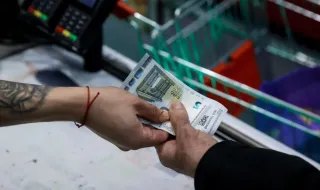
Greek households spent €6.4 billion more than their disposable incomes in 2025. Final consumption expenditure grew faster than incomes, which squeezed savings and deepened their negative level. The data are preliminary and were published by the Hellenic Statistical Authority ELSTAT.
The disposable income of households and non-profit organizations serving households increased by 3.7% – from 159.4 billion euros in 2024 to 165.4 billion euros in 2025. Over the same period, final consumption expenditure jumped by 5.2% - from 163.3 billion to 171.8 billion euros.
Thus, the gap between income received and expenditure incurred widened from 3.9 billion euros in 2024 to 6.4 billion euros last year. For households as a whole, this means using accumulated funds or other sources to cover consumption.
Savings are in negative territory
The savings rate, which measures gross savings as a share of gross disposable income, fell to minus 3.9% in 2025. A year earlier, the indicator was minus 2.4%.
„A negative savings rate indicates that households, taken as a whole, are spending more than their disposable income.“This indicator refers to households as a whole and does not mean that each family spent more than it received. It shows the overall ratio between income, consumption and savings in the household sector.
Greece is among the countries with the largest decline in income
Eurostat data for the first quarter of 2026 show a new deterioration in the indicators. The gross disposable income of Greek households decreased by 2.5% compared to the previous quarter. This is the second largest decline among the countries of the European Union.
A stronger decrease was recorded only in Romania - by 8.1%. Austria is the third country in the EU with a decline, as its indicator decreased by 1.8%. Over the same period, the savings rate fell in nine member states, with the largest declines in Romania, Greece and Austria.
“In the first quarter of 2026, the household savings rate remained stable in the euro area and increased in the European Union“, Eurostat said. However, for Greece, the indicator fell while consumption continued to increase.
Sources: ot.gr, tovima.com