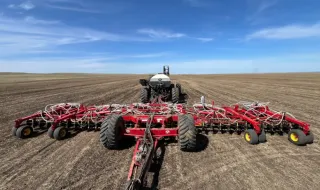
Kazakhstan plans to widely implement artificial intelligence in agriculture as part of a large-scale program for technological modernization of the agricultural sector. The initiative is supported by President Kassam-Jomart Tokayev, who sees an opportunity for the country to become an important producer and supplier of food to world markets.
In his annual address to the people of Kazakhstan, the head of state emphasized that traditional farming methods should be gradually supplemented by modern digital solutions, modern agricultural equipment and technologies for the efficient use of natural resources.
„At the same time, the time has come for technological modernization of agriculture. It is urgent to increase the production of modern tractors and combines in our country. This will allow to increase the efficiency of agricultural production.“
Tokayev paid special attention to the possibilities of using artificial intelligence in the agricultural sector. He reported that the idea was discussed during the visit of the co-founder of the American technology company NVIDIA Jensen Huang to Astana.
„Last week, the co-founder of NVIDIA, the great entrepreneur of the new wave Jensen Huang, who visited Astana, proposed the widespread implementation of artificial intelligence in the agriculture of Kazakhstan. In my opinion, this is a very timely proposal that should be implemented immediately.“
The use of artificial intelligence in agriculture can allow for more precise monitoring of crops, analysis of soil conditions, forecasting yields and optimizing irrigation. Such technologies can help farmers make decisions and limit the cost of water, fertilizers and other resources.
According to Tokayev, the modernization of agriculture has not only economic, but also strategic importance against the backdrop of growing risks to global food security.
„Undoubtedly, if our country successfully implements these plans, in the event of a global food shortage, that is, in the event of world hunger, Eurasia can become the main center that provides food for the world.“
Kazakhstan is among the countries with large areas of agricultural land, and the development of irrigation systems can create additional opportunities for increasing agricultural production.
The president pointed out that the country has significant agricultural territories near large water sources, which are still underused effectively.
„Kazakhstan has significant areas of land along large water sources, the irrigation of which can increase yields of traditional crops by 2-2.5 times.“
However, Tokayev warned that the expansion of cultivated areas should not be at the expense of the irrational use of water resources.
„At the same time, the expansion of sown areas should be carried out only with the use of advanced water-saving and agrochemical technologies.“
Water shortage remains one of the main challenges facing Kazakhstan's agriculture. Therefore, the modernization of irrigation infrastructure and the introduction of more efficient technologies are considered a prerequisite for the future growth of the sector.
„I will especially emphasize that the problem of water resource shortage in our country requires systematic and decisive measures.“
The head of state insisted on stricter control over water consumption, limiting losses in water supply networks and accelerating the digitalization of water resources management.
He also emphasized the need for agricultural producers to gain better access to modern equipment, technologies and financing.
According to the presented strategy, the development of artificial intelligence should go hand in hand with the modernization of agricultural infrastructure and improving productivity.
Kazakhstan's plans are part of broader efforts to diversify the national economy and reduce dependence on the extraction and export of raw materials.
If implemented successfully, investments in digital agriculture, irrigation systems, and modern agricultural machinery could increase the competitiveness of Kazakhstani producers and strengthen the country's role in international agricultural markets.