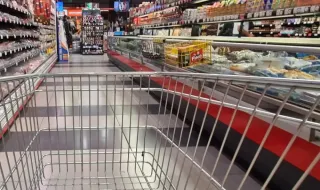
Russians are increasingly restricting their food spending, visiting stores less often and opting for cheaper products. Traffic to medium- and large-format food stores in the country fell by 2–7% year on year in January–September 2026, according to data from Focus Technologies cited by “Kommersant”. The sharpest decline was recorded at hypermarkets – 10.4% in August compared with the same month in 2025.
By category, traditional retail lost 7% of its customers, specialized food stores – 2.5%, and supermarkets – 1.2%. Separately, the total number of food purchase transactions in Russia fell by 2% in January–October, according to the “Check Index” service of “Platforma OFD”. The average purchase value reached 1,200 rubles, an increase of 6% year on year.
Rising prices are changing the shopping basket
Mikhail Vasiliev, head of the research and consulting department at Focus Technologies, attributed the change to a slowdown in consumer activity.
Against this backdrop, essential food products are becoming more expensive at double-digit rates. According to AB-Center, by the end of October, potatoes and onions had increased in price by around 23% year on year. Beetroot had become 20% more expensive, cabbage and eggs by 19%, buckwheat by 17%, chicken by 16%, sugar by 15%, and beef by 14%. Bread prices rose by 10%, while carrots became 11% more expensive.
Retail chains report differing trends
The decline is not affecting all retailers equally. According to Stanislav Bogdanov, chairman of the Association of Retail Companies, footfall at federal chains increased by 1–2% during the first nine months of the year. “Kommersant” also cited data from X5, according to which the group’s like-for-like traffic increased by 2.3% in the third quarter. Growth at “Pyaterochka” was 0.6%, at “Perekrestok” – 1.1%, and at “Chizhik” – 1.9%.
This means that the overall decline is concentrated mainly in retail that is not affiliated with large chains and among smaller players. Some consumers use delivery and collection of goods from pickup points, but the share of online food retail remains limited. Infoline expects it to reach 6.4% of the market in 2026, compared with 5.5% in 2025.
Fewer new stores and a narrower product range
The change in consumer behavior is already affecting retailers’ plans. The net increase in retail space operated by the major food chains amounted to 430.09 thousand square meters in the first half of the year – 46.2% less than in the same period of 2025. This is the weakest result since 2011.
Companies are limiting the expansion of their networks and reviewing their product ranges. Between January and August, the average range contracted by 0.6%, while the share of private-label and budget products in sales increased.