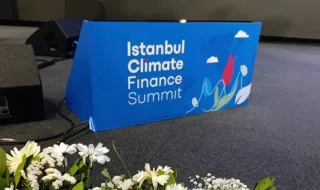
Australia and Türkiye are sharing hosting duties at COP31 in Antalya, but it is precisely this division of roles that is among the distinctive features of this year’s climate negotiations. Australia is leading the main direction of the talks, while the Turkish government is controlling the agenda through voluntary initiatives.
Australian Prime Minister Anthony Albanese will speak at the opening of the leaders’ segment, but is not expected to stay long. Day-to-day management of the negotiations has been entrusted to Climate and Energy Minister Chris Bowen.
Australia Between Coal and Clean Energy
Bowen will have to balance between two contradictory roles. Part of the country’s energy policy falls under his remit, while Australia remains one of the major exporters of fossil fuels. At the same time, the country is investing heavily in renewable energy, and the rapid expansion of solar power is already leading to periods when consumers receive electricity for free.
Turkish Environment Minister Murat Kurum is responsible for the voluntary initiatives. These include a programme to reduce waste and develop the circular economy, backed by First Lady Emine Erdoğan. She is calling for an end to the “single-use culture” and for more recycling instead of landfill. At the same time, Türkiye still has landfills from which significant amounts of methane escape.
International Energy Agency chief Fatih Birol is among the advisers behind the focus on electrification. The idea is for heating, transport and industry to gradually replace the direct use of fossil fuels with electricity. According to the concept he presented, this could halve the amount of energy required.
China, India and Brazil Bring Different Messages
Brazilian President Luiz Inácio Lula da Silva will arrive for his first international visit since winning a fourth term. He will bring two non-binding road maps – one for a global transition away from fossil fuels and another for halting and reversing deforestation. The documents contain no deadlines or mandatory requirements, but outline possible steps for governments.
Chinese President Xi Jinping will not attend in Antalya, but his country’s decisions will be highly significant for the outcome of the summit. China is the largest emitter of greenhouse gases and generates nearly one-third of the world’s annual carbon emissions. At the same time, Beijing is investing heavily in renewable energy and transforming the global energy market.
India is also trying to combine the rapid development of clean energy with its dependence on coal. The country has the third-largest installed renewable energy capacity after China and the United States, but coal provides around 70 percent of its electricity. In April, India withdrew its bid to host COP33 in 2028 without giving a reason.
The Absence of the United States
The United States is not expected to send an official delegation to COP31. President Donald Trump’s policy is focused on promoting fossil fuels and weakening the renewable energy sector. Against this backdrop, some Democratic members of Congress, governors and business leaders may attend in Antalya, even as Washington withdraws from the United Nations Framework Convention on Climate Change.
Europe, the UN and the Dispute Over Pace
British Prime Minister Andy Burnham will take part in COP for the first time. Following criticism over his silence during the summer heatwaves and drought, he confirmed his support for the British target of net-zero emissions by 2050, but also backed the Jackdaw gas field. Ed Miliband is expected to accompany him, while Miatta Fahnbulleh will lead the British delegation in the final negotiations.
European Commission President Ursula von der Leyen described the summer heatwaves and drought as a “summer of truth”. Wopke Hoekstra will lead the European Union’s final phase of the negotiations, with competition with China expected to be among his priorities.
For UN Secretary-General António Guterres, this will be his last participation in the organisation’s climate summit. The negotiations will be coordinated by UNFCCC Executive Secretary Simon Stiell, who will have to mediate between the two host countries and the different groups of nations.
Saudi Arabia remains one of the strongest opponents of a faster phase-out of fossil fuels. At COP30, the Saudi delegation blocked even an indirect mention of the commitment to transition away from fossil fuels until the final moments. At COP31, the dispute will concern not only new pledges, but also how specific and binding they will be.