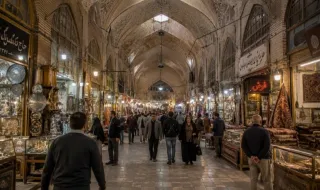
Consumers in the countries of the Persian Gulf are limiting their spending on non-food goods and luxury products amid inflation and uncertainty linked to the conflict around Iran. The Financial Times reports on the change, citing data from regional retail chains and their financial results.
The categories most affected are those that are not essential. Consumers are postponing purchases of clothing, household goods and luxury items, while spending on basic necessities remains more resilient.
Retailers report mixed results
Lulu Retail reported a 28% decline in profit for the nine months through September. The company is one of the region’s major supermarket operators, but its results show that pressure on consumers is also spreading beyond the luxury goods segment.
Majid Al Futtaim, the owner and operator of shopping malls and stores in the region, reported a 6% decline in retail revenue during the first half of 2026. The company attributed the result to weaker demand for non-food goods and more challenging consumer conditions, particularly in the United Arab Emirates.
The decline, however, is not the same for all retailers. Budget-oriented Union Coop reported an increase in net profit for the nine-month period, while Americana Restaurants increased its profit by 60% year on year. The data show that some consumption is shifting toward more affordable goods and services.
Moscow warns of fresh escalation
Against the backdrop of economic pressure, Russia’s Foreign Ministry warned of the risk of military hostilities breaking out around Iran. Maksim Maksimov, deputy director of the department for the Middle East and North Africa, said: “Three carrier strike groups and two Marine expeditionary units have been deployed in the region.”
According to him, Moscow is observing signs that, in Russia’s assessment, point to a possible new escalation. The claim regarding the number and deployment of US forces is the position of Russia’s Foreign Ministry and has not been independently confirmed in the media reports reviewed.
Such a development would increase pressure on trade in the countries of the Persian Gulf, where consumer confidence depends on prices and supplies as well as on tourist flows and the security of transport routes. For now, data from retail companies show that households are responding primarily by postponing purchases, reducing spending on luxury goods and choosing cheaper alternatives.
Sources: ft.com, thenationalnews.com