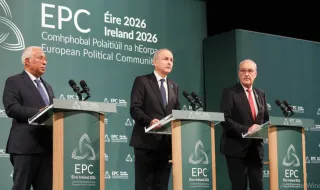
Competitiveness, affordable energy, innovation and economic security emerged as the main business themes at the meeting of the European Political Community in Dublin, which brought together nearly 50 heads of state and government.
The forum is being held under the motto “Europe – strong, secure and connected”, with one of the central discussions devoted to building a more competitive European economy through investment in innovation, improved connectivity and more affordable energy. High energy costs, the development of artificial intelligence and economic resilience were among the issues discussed by leaders in Dublin.
European Parliament President Roberta Metsola took part in the special roundtable “Building a Competitive Europe – Innovation, Connectivity and Affordable Energy”. The topic reflects growing concerns that high electricity and gas prices, weak investment activity and the technological gap with the United States and Asia could limit European companies’ opportunities for growth.
Economic security is also becoming increasingly closely linked to geopolitics. During the meeting, European Commission President Ursula von der Leyen announced that Brussels is preparing a new, 22nd package of sanctions against Russia, which is to be presented before the special meeting of the European Council on 26–27 November.
According to European diplomats, the future measures could target Russian banks, cryptocurrencies and crypto platforms, as well as mechanisms used to circumvent restrictions through third countries. Such decisions would have a direct impact on the financial sector, international payments and companies that continue to have exposure to the Russian market.
At the same time, the European Commission is preparing proposals to cover Ukraine’s financial needs in 2027. This once again puts the issue of future European funding, budget priorities and the role of private capital in the recovery of the Ukrainian economy on the agenda.
The role of artificial intelligence in competitiveness is also being discussed in Dublin. European leaders face the need to strike a balance between regulating new technologies and creating a sufficiently favourable environment for investment, innovation and the growth of European companies.
The meeting comes amid mounting pressure on European industry from high energy costs, global competition and the need for massive investment in digitalisation, electricity grids, the defence industry and new production facilities.
The discussions in Dublin do not constitute official legislative decisions, and the forum does not adopt a binding joint communiqué. Its significance for business, however, lies in the political signals it sends – cheaper energy, technological investment, connectivity and economic security are increasingly taking shape as the main priorities of European economic policy.
The meeting of the European Political Community is being held a day before the informal European Council meeting in Dublin on 13 November, where some of these topics are expected to be taken up again, this time in a format limited to EU leaders.