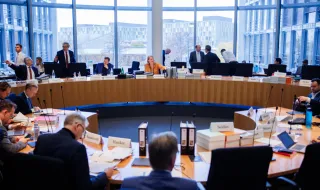
The Bundestag’s Budget Committee approved the draft federal budget of Germany for 2027 after almost 16 hours of negotiations. The session ended at 5:55 a.m., and the draft was backed by the governing CDU/CSU and SPD. The Greens, The Left and the Alternative for Germany voted against it.
The plan provides for the federal government to spend €560.92 billion next year. Of this amount, €61.85 billion is earmarked for investment. Net new borrowing in the core budget will amount to €122.97 billion, which is €4.25 billion higher than the figure set out in the government’s original draft.
Loans from the special funds for the German armed forces and infrastructure will be added to this borrowing. As a result, total new borrowing will exceed €210 billion. This will be the second-highest amount in the history of the Federal Republic of Germany. The only higher figure was the debt incurred in 2021 during the COVID-19 pandemic, when new borrowing reached €215.4 billion.
Defence receives nearly €110 billion
One of the budget’s main priorities is defence. Spending by the Ministry of Defence will amount to €109.75 billion in 2027. This is an increase of around €27 billion compared with the previous year. Additional funds from the special fund for the Bundeswehr will also be added to this amount.
The higher spending is linked to the consequences of Russia’s war against Ukraine, NATO commitments and the ongoing rearmament of the German army. By the end of June 2026, the German government estimates its support for Ukraine to date at around €100 billion.
The social budget remains the largest
The largest individual budget is that of the Ministry of Labour and Social Affairs. €203.29 billion has been earmarked for it. The amount includes restrictions on social benefits, but the main pressure comes from the pension system.
Generations born in the 1960s are gradually retiring. At the same time, the number of people in work who finance the system is declining. In 2025, pensions in Germany cost more than €420 billion, with €127 billion covered by the state. For 2027, the federal subsidy is to be reduced by around €3 billion, while pension contributions paid equally by employers and employees are expected to reach nearly 20% of gross wages.
The Federal Employment Agency will also rely on budgetary support. More than €8 billion in transfers from the federal budget has been earmarked for 2027.
Dispute over electricity tax
The issue of reducing electricity tax for all consumers remains unresolved. The measure is part of the coalition’s intentions, but by the end of the session no funding had been secured for its implementation. According to German broadcaster ARD, a final decision could be made during budget week in the Bundestag.
The opposition described the budget as “a huge mountain of debt” and “irresponsible”. Green MP Sebastian Schäfer and Left Party MP Dietmar Bartsch accused the governing parties of shifting the burden onto future generations. The two parties are calling for people with high incomes and substantial assets to be taxed more heavily, but the CDU/CSU reject this idea.
The final vote on the budget is scheduled for 27 November. Until then, the coalition may introduce further changes, including on the contentious issue of electricity tax.