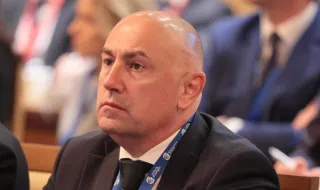
“Toplofikatsia Sofia” is gradually heading for bankruptcy, while its accumulated debts have already exceeded €1.3 billion. This was stated by Lyubomir Karimanski, a member of the Governing Council of the Bulgarian National Bank, in an interview with bTV.
According to him, the problem may go unnoticed for some time, but at a certain point its consequences will be felt suddenly. Karimanski said that a solution must be sought jointly by the state and Sofia Municipality.
He cited privatization, a public-private partnership or a recovery plan as possible options. In his view, a clear mechanism must be chosen instead of continuing to postpone the problem.
Mediapool provided additional context regarding the size of the debt, reporting that the company's liabilities to “Bulgargaz” and the Bulgarian Energy Holding exceed €1.3 billion. On November 19, the Sofia Municipal Council is expected to discuss an independent technical, financial, legal and regulatory analysis of “Toplofikatsia Sofia”.
Karimanski also commented on Standard & Poor’s decision to change the outlook on Bulgaria’s long-term credit rating from positive to stable. He described the change as a serious warning, but stressed that it did not mean a downgrade of the rating itself.
According to him, the agency is drawing attention to the expenditure side of the budget, the implementation of the commitments undertaken and the need for sustainable revenues rather than one-off measures.
Karimanski also warned of a growing imbalance between imports and exports. In his words, if increased consumption is not supported by sufficiently competitive production, external imbalances will deepen and prices will continue to rise.
“Life will simply become more expensive,” Lyubomir Karimanski warned.The financier said that the government must explain more clearly its policy under the 2027 Budget and how it intends to implement the measures envisaged. He described the presentation of the updated medium-term budget forecast as insufficiently clear.
Karimanski raised the question of whether the consequences of the crisis in the Strait of Hormuz for electricity prices in Europe and Bulgaria had been taken into account, as well as its impact on fertilizer prices and agriculture.
Regarding the planned elimination of 5,042 positions in the public administration, he insisted that sectoral analyses and the specific impact on the consolidated fiscal program for the 2027–2029 period should first be presented.
Karimanski also called for changes to the rules governing remuneration in the “Security” sector, including the Ministry of the Interior, the National Security Service and the defense sector. In his view, a temporary wage freeze does not solve the problem if salaries can once again be increased without a lasting change to the relevant special laws.