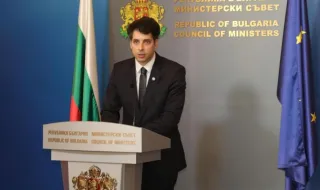
The European Commission has approved Bulgaria’s fifth payment under the Recovery and Resilience Plan, Deputy Prime Minister Atanas Pekanov announced. The amount exceeds €1.7 billion, and according to him, the country will receive nearly 99% of the funds under the plan.
The payment follows the implementation of more than 50 reforms and investments. Pekanov said that by spring 2026, Bulgaria had received slightly more than half of the funds and that the risk of losing European funding had been real.
“Today’s success is the result of the swift and bold actions we took in the very first days of the cabinet after it was sworn in in May,” Pekanov said.Reforms in the anti-corruption sector and energy
Among the key measures covered by the latest payment, Pekanov highlighted the establishment of an anti-corruption commission. According to him, the work of the Ministry of Justice and the Ministry of the Interior made it possible to unlock €400 million that had been blocked for Bulgaria.
The other major challenge was related to the energy sector. According to the deputy prime minister, an agreement was reached on the restructuring of the Bulgarian Energy Holding, which had been postponed for years.
In the Stara Zagora region, it was agreed that the funds under the plan would be used for investments instead of losing around €500 million under the Recovery and Resilience Plan and a further €1 billion under the Just Transition Fund.
Mandatory consolidation of water and sewerage companies scrapped
The government agreed with the European Commission to remove the obligation to consolidate water and sewerage companies in municipalities that have their own water utilities. According to Pekanov, this was important for the municipalities and for preserving a significant financial resource.
Investments in healthcare, culture, industry and the social sector have also been completed under the plan. The results cited include new metro trains and railway trains, medical helicopters, medical equipment, renovated homes for elderly people and people with dementia, as well as investments in energy and transport.
Pekanov also noted that STEM classrooms have been established in all schools. He thanked the eight governments that had worked on the plan since 2020 and said its implementation must be built upon.
“This is not the end. From now on, we must use the progress we have made and build upon it,” the deputy prime minister said.
Sources: dariknews.bg, nova.bg