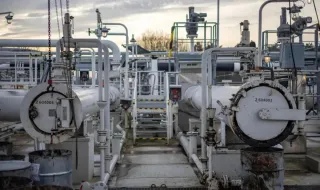
German gas storage facilities are 54.5% full, or around 134.7 terawatt-hours, amid the cold weather and increased demand for heating. This is a significantly lower level than that recorded during the same periods in previous years. A year ago, reserves stood at around 68%, reports „Bild“.
The Federal Network Agency describes the situation as „very serious“, but sees no immediate danger of shortages. „Gas supplies in Germany are stable, and security of supply is guaranteed,“ the regulator states. According to its assessment, the risk of strained gas supplies remains low, as gas is entering the country via pipelines, liquefied natural gas terminals and storage facilities.
Reserves have been declining for ten consecutive days. The last minimal increase, of 0.04%, was recorded on November 18. After that, the decline was 0.57% on November 23, 0.65% on November 24 and 0.8% on November 25. The International Association of Gas Storage Operators warns that prolonged extremely low temperatures could put gas supplies under pressure during the winter.
Germany Relies on Imports and Liquefied Gas
Between November 19 and 25, Germany imported 18.8 terawatt-hours of gas via pipelines. Deliveries through Germany’s liquefied natural gas terminals reached 2.3 terawatt-hours, while the terminals’ average utilization rate was 41.2%.
The Federal Network Agency emphasizes that the level of reserves cannot be considered in isolation. Security of supply depends simultaneously on pipeline imports, liquefied gas, infrastructure, consumption and the volumes available in storage facilities. The agency expects reserves to remain relatively low at the end of the winter as well, but does not forecast a deficit.
European Target Eased Due to Market Conditions
Under European Union rules, gas storage facilities must reach 90% between October 1 and December 1. In 2026, however, greater flexibility was provided for because of difficult conditions in the energy market. In July, the European Commission confirmed that a fill level of 80% would be sufficient to guarantee supplies through the winter.
The German regulator states that the lower level of reserves is not in itself evidence of a shortage. Its latest assessment notes that gas is being withdrawn within the expected range given weather and market conditions. At the same time, „Bild“ warns that colder weather could lead to a renewed acceleration in consumption and higher gas prices during the winter.
Sources: rbc.ru, bild.de