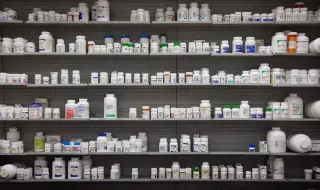
US President Donald Trump has backed off from imposing high tariffs on pharmaceuticals and semiconductors imported from the European Union.
Last month, Trump said pharmaceuticals and semiconductors were not covered by the US-EU trade deal, meaning those sectors could face tariffs of 250% and 100% respectively, the BBC recalls.
According to new details of the US-EU deal published on Thursday, EU tariffs on pharmaceuticals and semiconductors will be capped at 15%, in line with most other sectors in the trade deal.
The US and EU said this is a “first "a step in a process" that could be expanded as relations develop.
The trade deal was first announced at a meeting between Trump and European Commission President Ursula von der Leyen in Scotland last month. They agreed to cut tariffs on most EU exports to 15%, half the rate Trump had initially threatened but higher than the 10% tariff secured by the UK.
At the time, von der Leyen described it as a "framework" agreement, the details of which would be worked out in the coming weeks. But later threats of higher tariffs on pharmaceutical and semiconductor exports to the United States have heightened concerns that those products will be left out of the deal.
In July, Trump threatened to raise pharmaceutical tariffs to 200%, but in an interview with CNBC on August 5, he said they could eventually reach 250%. “We want pharmaceuticals made in our country“, he told CNBC.
EU member state Ireland is a major exporter of pharmaceuticals to the United States, as are other European countries. Ozempic maker Novo Nordisk is also based in Europe, with headquarters in Denmark.
On Thursday, Ireland's Deputy Prime Minister and Foreign Minister Simon Harris welcomed the assurance that the 15% tariff would include pharmaceuticals and semiconductors. “This provides an important shield for Irish exporters who could be subject to much higher tariffs,” he said.
Under the joint agreement, the US will apply the new 15% tariff rate to most European goods, including European exports of semiconductors and timber, from September 1.
In return, the EU will reduce tariffs to zero on “all US manufactured goods“, including agricultural products such as fresh fruit and vegetables, pork, bison and nuts.
Only after Europe removes tariffs on US exports - a move that requires legislation - will the White House reduce the 27.5% tariff on European exports of motor vehicles to 15%, the agreement said.
EU Trade Commissioner Maroš Šefčovič told a news conference that the deal 15% tariff on cars to be applied retroactively from the first day of the month in which the legislative process begins.
Šefčovič said the EU had a "firm intention" to start this process this month and had received assurances from the US that the lower tariff would come into effect from 1 August.
The director general of the European Automobile Manufacturers' Association, Sigrid de Vries, told the BBC's "Today" programme that it was important to have a deal but the car industry was "not out of the woods yet" as manufacturers were paying "millions of euros in tariffs every day" since April.
“The deal says we will reduce from 27.5% to 15%, but we are starting from a rate of 2.5%, so the impact will still be big,“ she said, adding that this will affect prices for customers in the US and beyond.
European Commission President Ursula von der Leyen said in an interview with X that the deal offers predictability for businesses and consumers in the bloc, as well as “stability in the world's largest trading partnership“.
US Commerce Secretary Howard Lutnick told X that the deal “creates historic access to the huge European markets“ for American producers.
The French wine exporters' federation, FEVS, said it would “create major difficulties for the wine and spirits sector“.
In the US, the Distilled Spirits Council also said it was disappointed with the agreement.
It says that without a “permanent return to zero tariffs on spirits“, US distillers will not have the certainty to plan for future growth, while higher EU spirits tariffs “will further exacerbate the challenges facing restaurants and bars“ in the US.