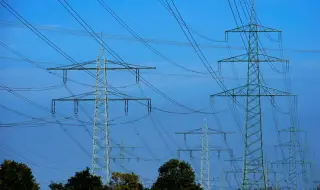
Germany could face electricity shortages by 2030 if the country does not introduce new generation capacity in time, the Handelsblatt newspaper reported, citing a document from the Federal Grid Agency.
The agency has prepared a report for the government on the situation with the security of electricity supply, which was approved by the cabinet on September 3. In it, the regulator describes two scenarios for the development of the situation until 2035, in one of which the country manages to achieve all the goals for reforming the energy system, and the other assumes a delay in the introduction of new capacities in the renewable energy segment and in the construction of gas-fired power plants.
The first scenario does not imply problems in the power supply, while in the second they may arise in 2030. It is expected that in the pessimistic scenario in the country “for several hours a year it will not be possible to guarantee the security of supplies solely through market methods“. The situation will normalize by 2035, since a significant increase in the pace of construction of gas-fired power plants is expected from 2031.
The Cabinet of Ministers approved this conclusion of the department. Meanwhile, in the accompanying letter, Economy Minister Katharina Reiche stated that Germany's electricity security is guaranteed until 2035. In the document, she also explained that possible power shortages do not mean that there will be large-scale power outages.
“In such cases, various reserve capacities will be on standby to avoid risks to the reliability of the electricity grid“, the newspaper quoted the letter as saying, explaining that such reserve capacities operate outside the existing electricity market and are activated in emergency situations.
One reason why such situations could arise, the regulator said, is the potential imbalance in consumer demand due to the growing use of electric cars and heat pumps for heating homes, which increase electricity consumption. The publication does not specify whether the regulator provides a probability estimate for a specific scenario.