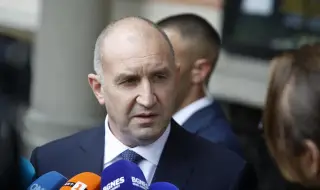
As promised, military aircraft and tankers left Sofia Airport within the specified period, which minimizes the risk of potential attacks in the immediate vicinity of the Bulgarian capital. This was stated at the beginning of the meeting of the Council of Ministers by Prime Minister Rumen Radev, quoted by dariknews.bg.
Radev commented that at the meeting held yesterday, a critically important agreement for the future of the Burgas refinery was reached. “At the end of last year, “Litasko“ imposed a lien on the refinery to purchase crude oil from companies registered in Switzerland. This led to significant difficulties for the operation of the refinery. It was forced to work with heavy types of oil, and hence technological difficulties, a reduction in production volumes, rapid wear of the installations and put the very future of “Lukoil Neftochim Burgas“ at risk, the Prime Minister explained.
He recalled that after yesterday's meeting this embargo has already been lifted and the refinery will now be able to operate normally.
“We continue to work hard to increase economic growth, but not by stimulating only domestic consumption with loans, but by aggressively attracting investments and stimulating exports by supporting Bulgarian business, improving the investment environment, increasing the competitiveness and productivity of the Bulgarian economy“, Radev also announced.
In this regard, he commented that yesterday they held the first meeting of the Investment Council and the Central Coordination Bureau to the government. “Our model for infrastructure development is almost exhausted. This model generates corruption, gives rise to poor quality, takes away significant public resources and pushes the development of modern infrastructure in Bulgaria somewhere into the unclear future“, said Rumen Radev.
For this reason, the Prime Minister stated that they will propose significant legal improvements based on the best European practices that would allow the inclusion of private capital. “This will lead to a significant reduction in corruption, an increase in quality and will enable the state to provide resources in strategic areas - education and science, sports, healthcare, culture and security“, the Prime Minister further commented.
He added that he expects the Ministry of Regional Development and Public Works to conduct thorough inspections of road repairs and construction. “From today, we are stopping blind payment only based on invoices and fictitious protocols. Civil servants who sign protocols for poorly performed activities will be held accountable“, said Radev.