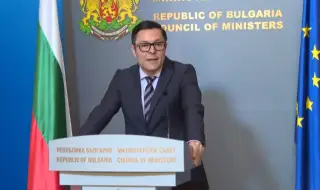
The government has requested an extension of the current derogation for "Lukoil" from the US authorities and is continuing active talks with Washington. This is how Deputy Prime Minister and Minister of Economy, Investments and Industry Alexander Pulev responded to a question from Nova Television at a briefing.
“We have submitted an official request to extend the license under the derogation. We are continuing the active dialogue with OFAC and with US institutions. We will take all necessary actions to ensure the security of supplies and the smooth operation of the refinery“, said Alexander Pulev.
We recall that on April 14, Bulgaria received a new 6-month derogation for “Lukoil“. This was announced then by the acting Prime Minister Andrey Gyurov and the acting Energy Minister Traycho Traykov. Currently, the derogation has been extended until October 29.
In addition, the cabinet has prevented the risk of sanctions and blocking the work of “Lukoil Neftochim Burgas“ after the decision of the Constitutional Court to declare the changes in the so-called unconstitutional. “30-second law“, added the Deputy Prime Minister.
According to him, the hasty legislative changes adopted by the previous administration have created serious risks for the state, including the danger of multi-billion financial losses.
“We all remember the so-called. 30-second law. These changes created a whole cascade of problems – both for Bulgarian citizens and for the country's economy. The consequences could have been potential damages of over 3 billion euros due to the arbitration claim against Bulgaria, blocking of the accounts of “Lukoil Bulgaria” and limiting the company's ability to work with unsanctioned oil suppliers," Pulev said.
He recalled that the Constitutional Court had declared the legal changes unconstitutional and warned that without the urgent actions of the cabinet, this would have led to the automatic restoration of control over the company by the Russian owners and managers.
„If it were not for the quick and effective work of the Bulgarian government, this decision would have returned operational control to the hands of the Russian shareholders and Russian managers. This meant the risk of sanctions, the suspension of the refinery's operation and serious shocks for both the fuel market and Bulgarian consumers,“ the minister said.
Pulev explained that an anti-crisis plan was prepared by order of Prime Minister Rumen Radev, which included both legislative changes and urgent decisions of the Council of Ministers. “We worked simultaneously in two directions – through the National Assembly and through decisions of the Council of Ministers. Debates on the legislative amendments are already underway in parliament, and the government has declared key companies from the “Lukoil“ group as objects related to national security,“ he said.
According to the minister, this way the state will continue to exercise effective control over the company's activities while complying with international sanctions. “The government respects private property and the interests of investors, but is guided primarily by the interests of Bulgarian citizens and the Bulgarian economy. We have also resolved this last problem. The Bulgarian state will continue to exercise the necessary control over “Lukoil Bulgaria“ in full compliance with the sanctions regimes of the European Union, the United States and the United Kingdom,“ Pulev emphasized.
He thanked the teams at the Ministry of Economy, the MPs and the ministers who participated in the preparation of the anti-crisis measures.
Pulev assured that Bulgaria had not violated international sanctions against Russia and that the refinery was operating only with permitted supplies of crude oil.