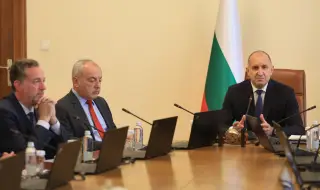
Bulgaria is joining NATO's wartime oil pipeline, which will cost at least $1.2 billion. This is clear from a decision adopted by the government at its regular meeting on Wednesday. The ministers of defense and energy are the sponsors.
Turkey's proposed military fuel pipeline through Bulgaria will ensure energy supplies for NATO's Eastern European flank. Bloomberg was the first to report on the idea, and apparently the project was approved at the NATO summit in Ankara, after Bulgaria has already put it into operation.
The planned pipeline will run from Turkey through Bulgaria to Romania and will be used exclusively for military purposes. This route is estimated to be about 1/5 cheaper than alternative proposals, including routes through Greece or Romania's western neighbors. These alternatives would rely on sea transport, making them more vulnerable to disruptions.
Today's government decision makes it clear that project activities in Bulgaria will require funding in the amount of 10 million euros, which will be provided by the Ministry of Defense under the NATO Security Investment Program. The project's objectives are to expand NATO's fuel supply chain to the Eastern Flank and connect the Bulgarian network with NATO infrastructure in Greece, Turkey and Romania, the government announced.
The Council of Ministers designates “Bulgartransgaz“ EAD as the contracting authority to undertake all actions for the conduct of the feasibility study. "The gas transmission operator is the only state-owned company that has implemented similar projects and has significant experience in developing and managing infrastructure, investment and technical projects of this scale. The company is tasked with selecting a contractor; concluding a contract with it and organizing and coordinating subsequent activities", the statement further notes.
The war in Ukraine and conflicts in the Middle East, including disruptions to energy supplies due to the closure of the Strait of Hormuz, have forced NATO to review its fuel supply infrastructure. Member states are looking for a reliable and cost-effective supply chain for the eastern members of the alliance.
The European Union and NATO have also agreed on a 100 billion euro infrastructure project that will lay the foundations for a "military Schengen area" to accelerate the movement of troops and equipment across Europe. The project involves the development of 500 “hotspots“, where infrastructure to facilitate military mobility will be created or strengthened over the next three to four years.
"This will reduce the time it takes to transfer troops and materials from one part of the bloc to another, both for exercises and in case of emergencies," the Greek defense minister said at the Energy Transition: Eastern Mediterranean and South-Eastern Europe Summit. A shared reserve or “pool“ of military equipment will also be created, modeled on the EU Civil Protection Mechanism.
The regulation will be ready by 2027, and the infrastructure by early 2030.